
20 Infographic Tips for Supporting Trans/Nonbinary Children during the Holidays
Now available in IG-friendly graphics!

I already posted Tips for Supporting Trans/Nonbinary Children during the Holidays. Then I worked with my friend, barber, and fabulous graphic designer, Oliver Bennan, to convert them into easy-to-share infographics. Aren’t they amazing?!?
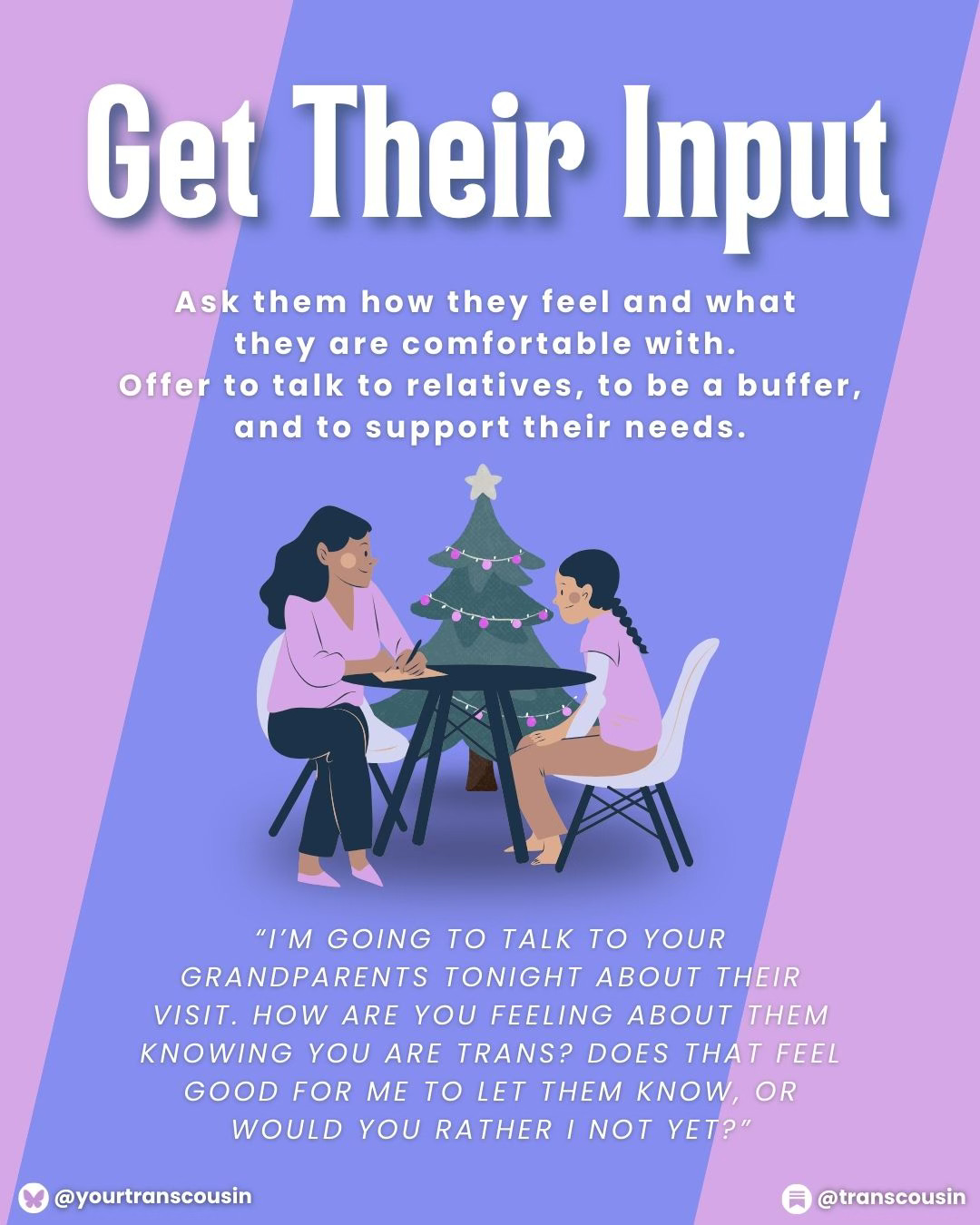
Get their input. Ask them how they feel and what they are comfortable with. Offer to talk to relatives, to be a buffer, and to support their needs.
I’m going to talk to your grandparents tonight about their visit. How’re you feeling about them knowing you are trans? Does that feel good for me to let them know, or would you rather I not yet?
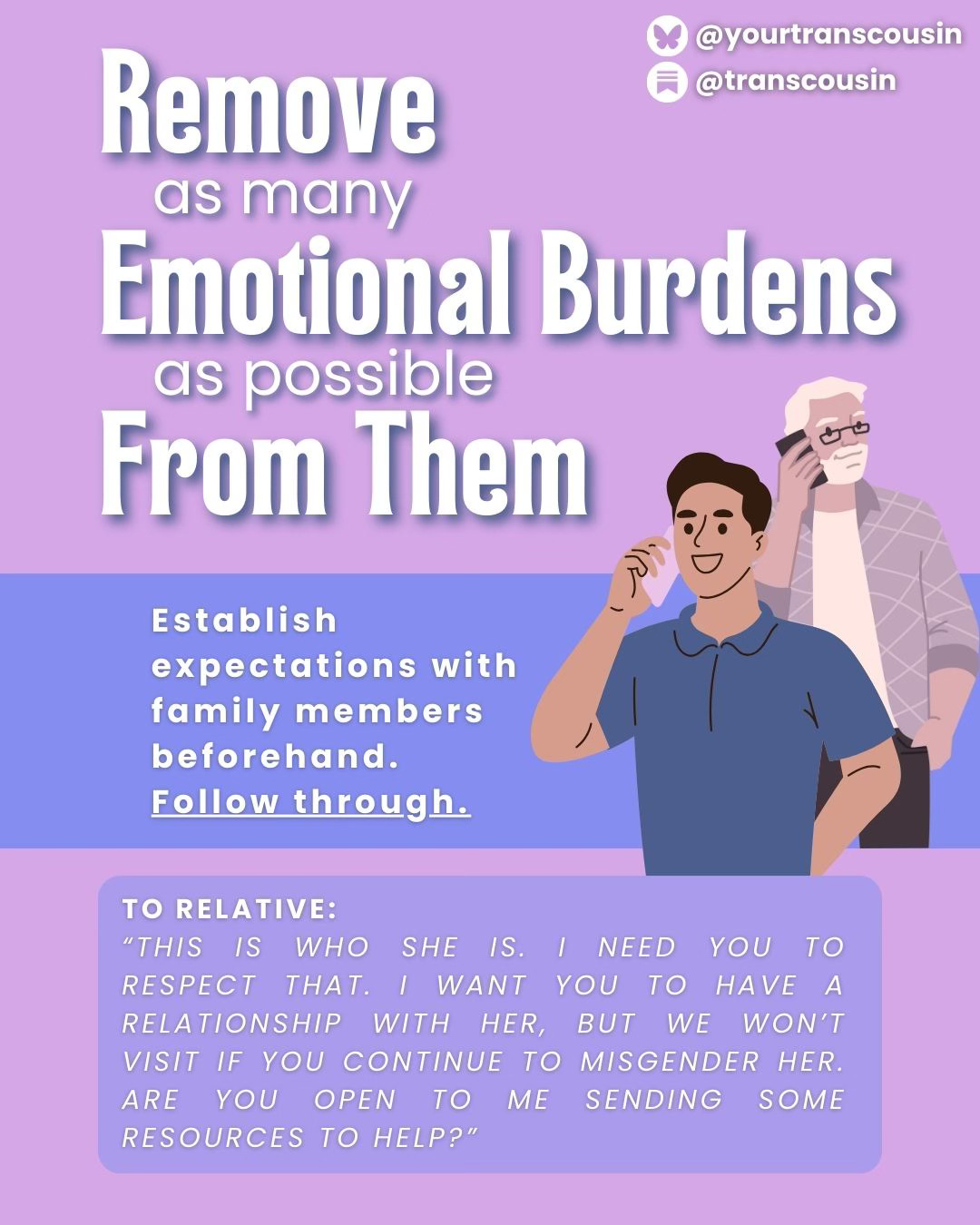
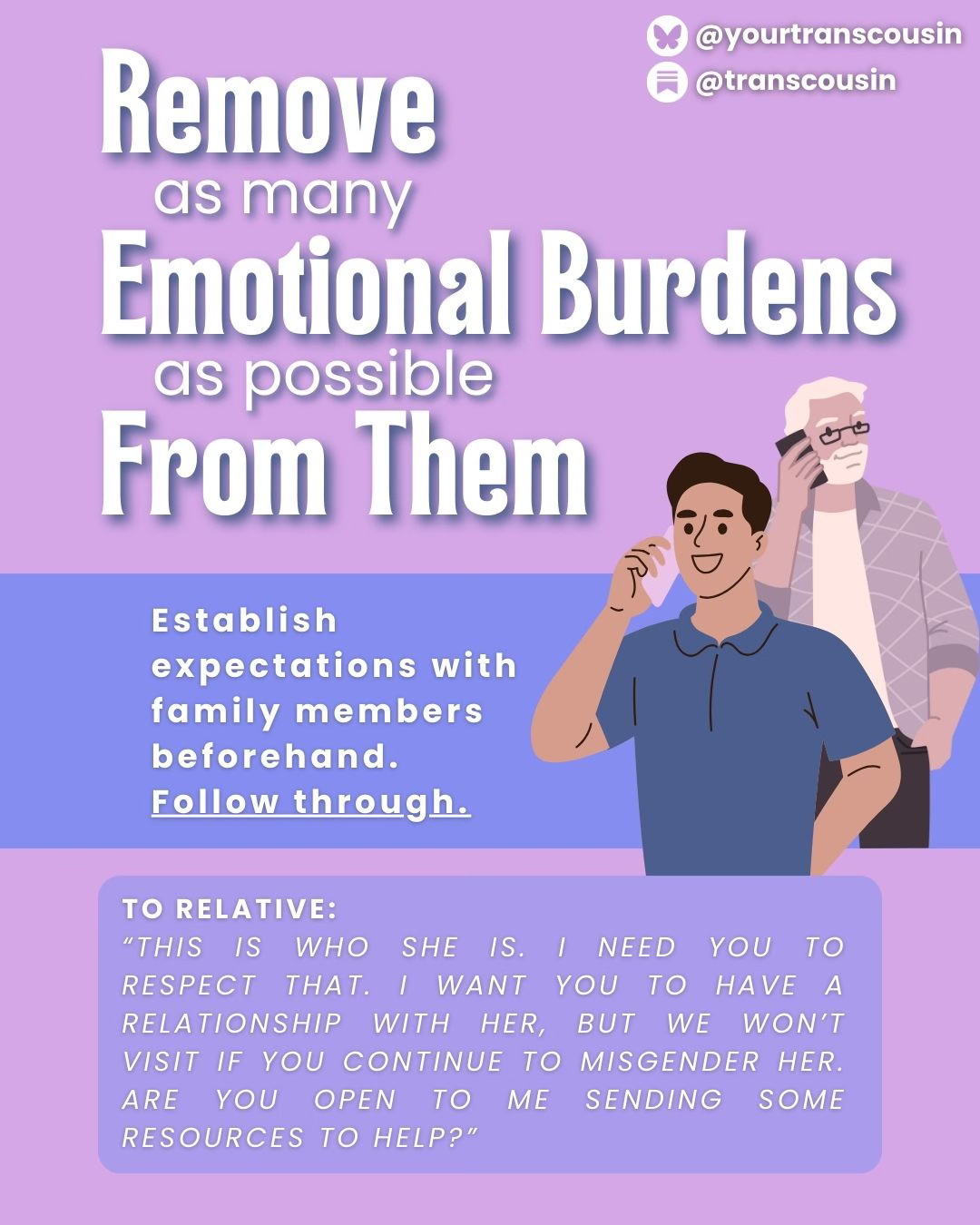
Remove as many emotional burdens as possible from them. Establish expectations with family members beforehand. Follow through.
To relative: This is who she is. I need you to respect that. I want you to have a relationship with her, but we won’t visit if you continue to misgender her. Are you open to me sending some resources to help?
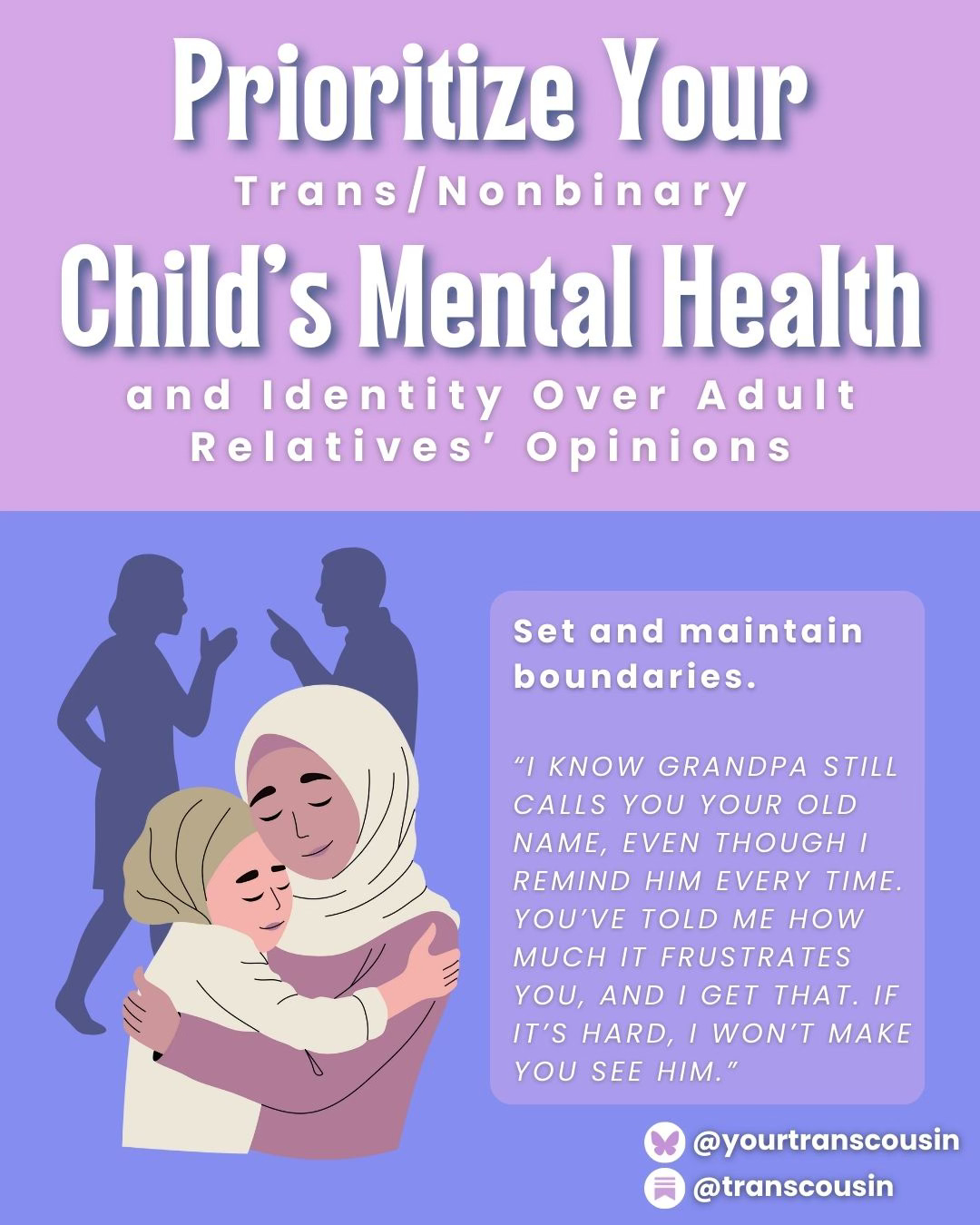
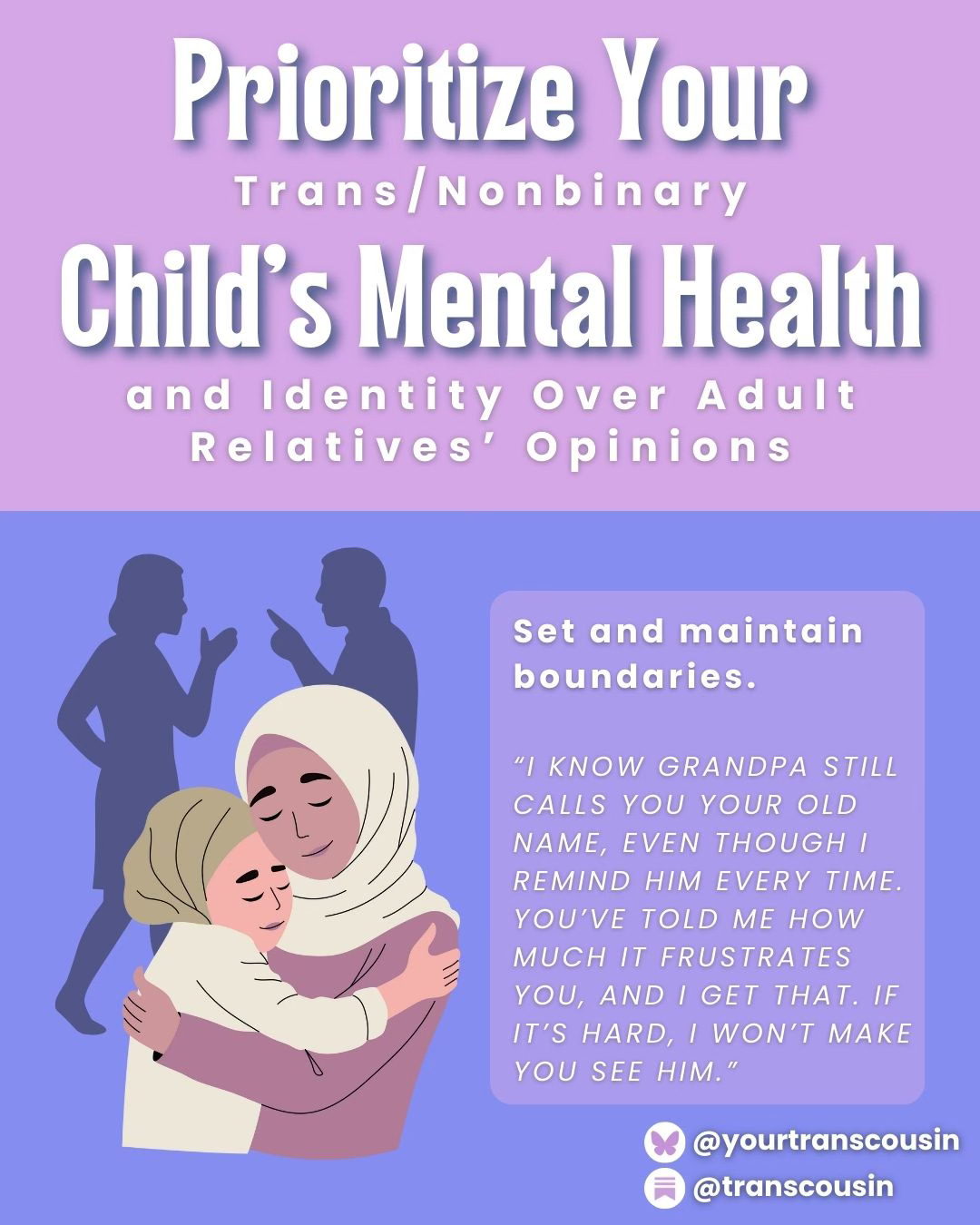
Prioritize your trans/nonbinary child’s mental health and identity over adult relatives’ opinions. Set and maintain boundaries.
I know Grandpa still calls you your old name, even though I remind him every time. You’ve told me how much it frustrates you, and I get that. If it’s hard, I won’t make you see him.
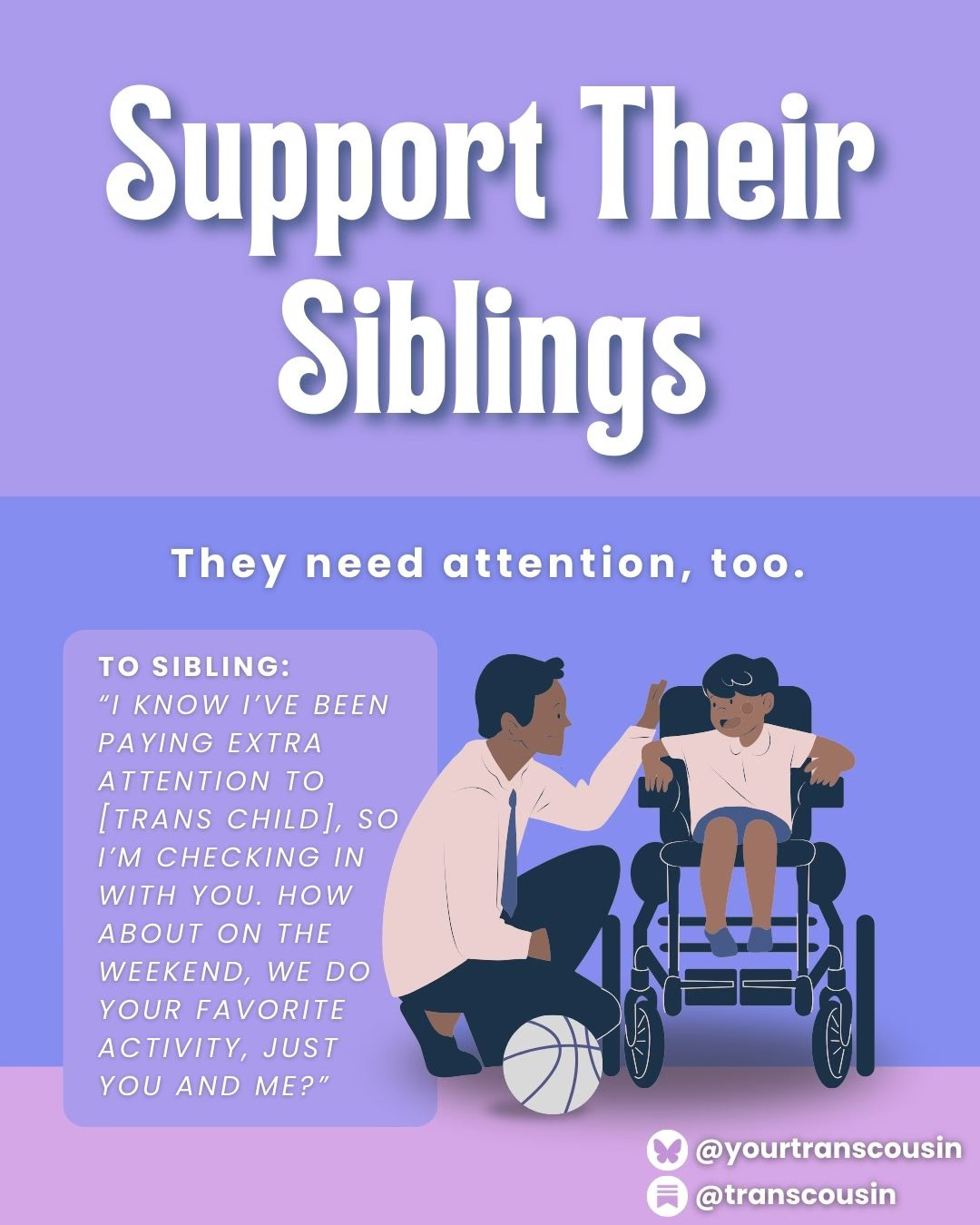
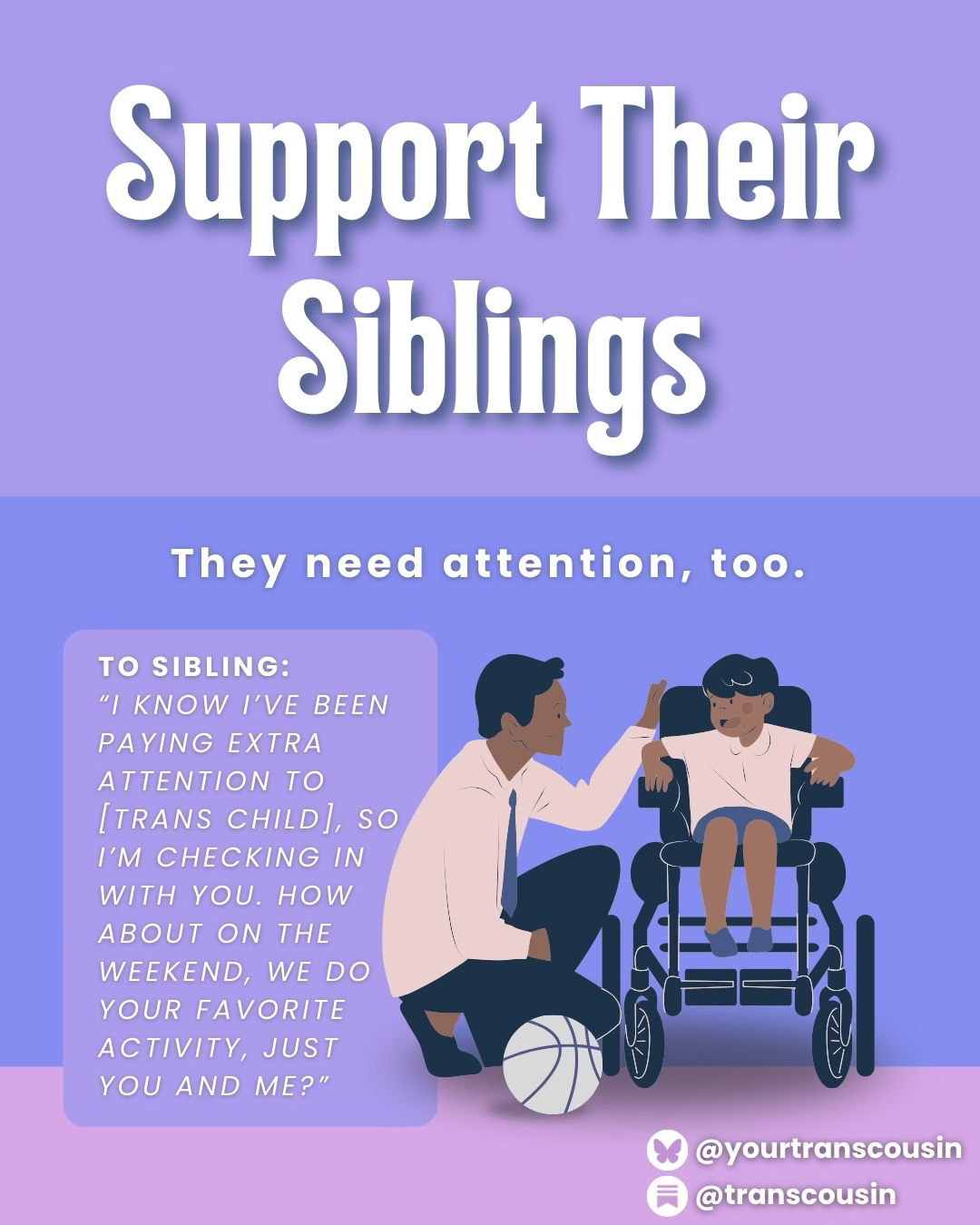
Support their sibling(s). They need attention, too.
To sibling: I know I’ve been paying extra attention to [trans child], so I’m checking in with you. How about on the weekend, we do your favorite activity, just you and me?
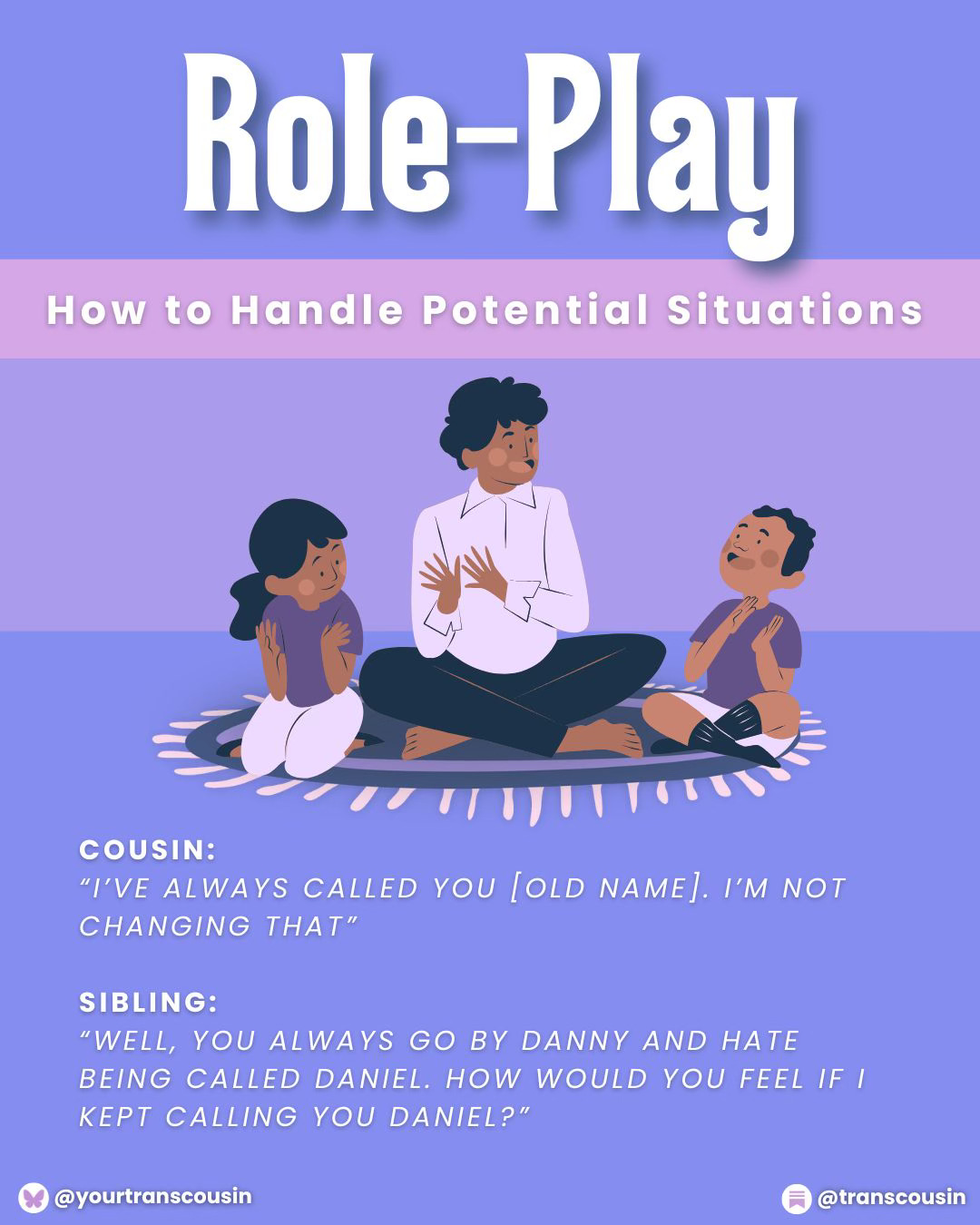
Role-play how to handle potential situations.
Cousin: I’ve always called you [old name]. I’m not changing that.
Sibling: Well, you always go by Danny and hate being called Daniel. How would you feel if I kept calling you Daniel?

Be a safe person/place. Create and reinforce your home as a safe place.
I’m so glad you came to me to talk about this. We’ll figure this out together.

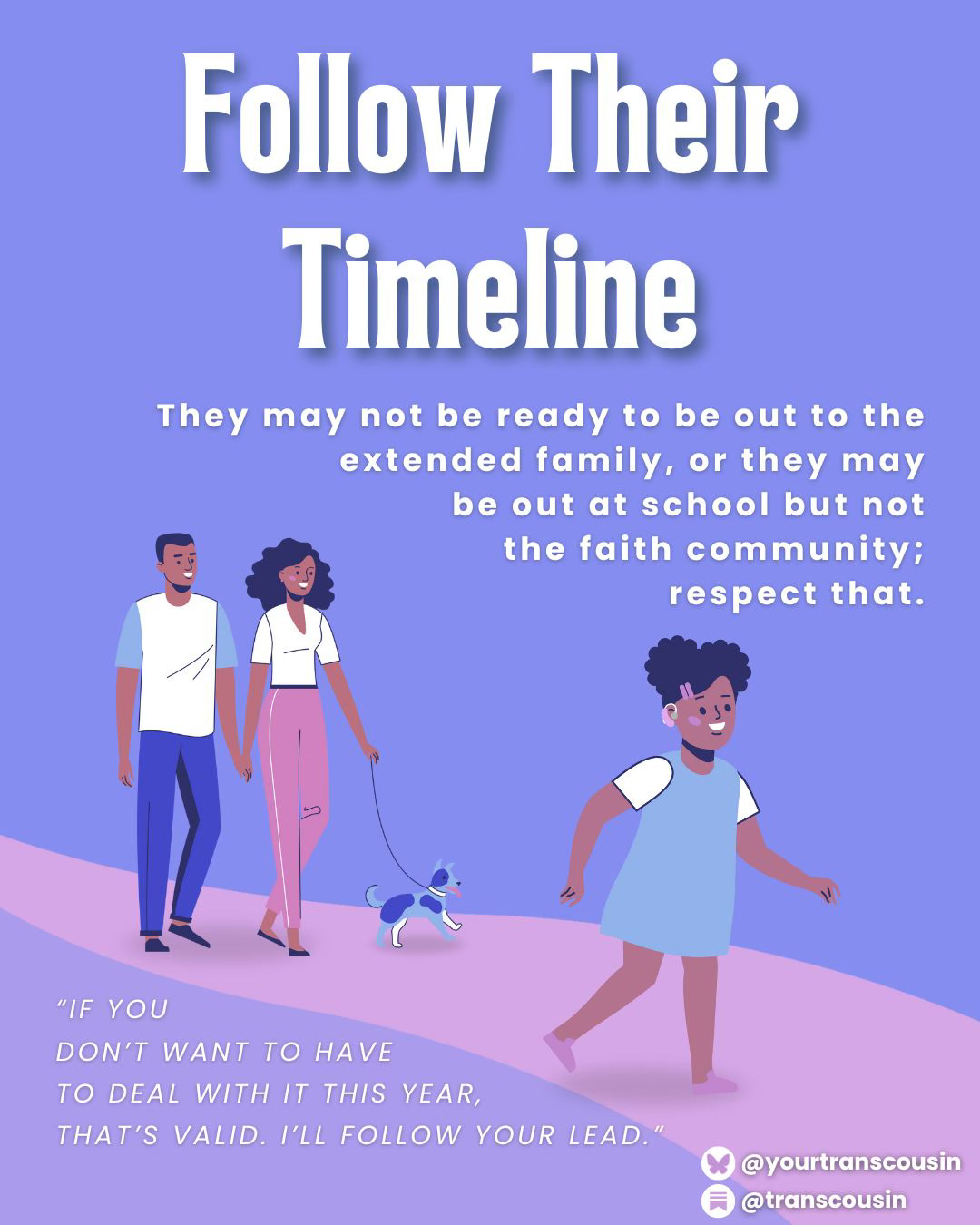
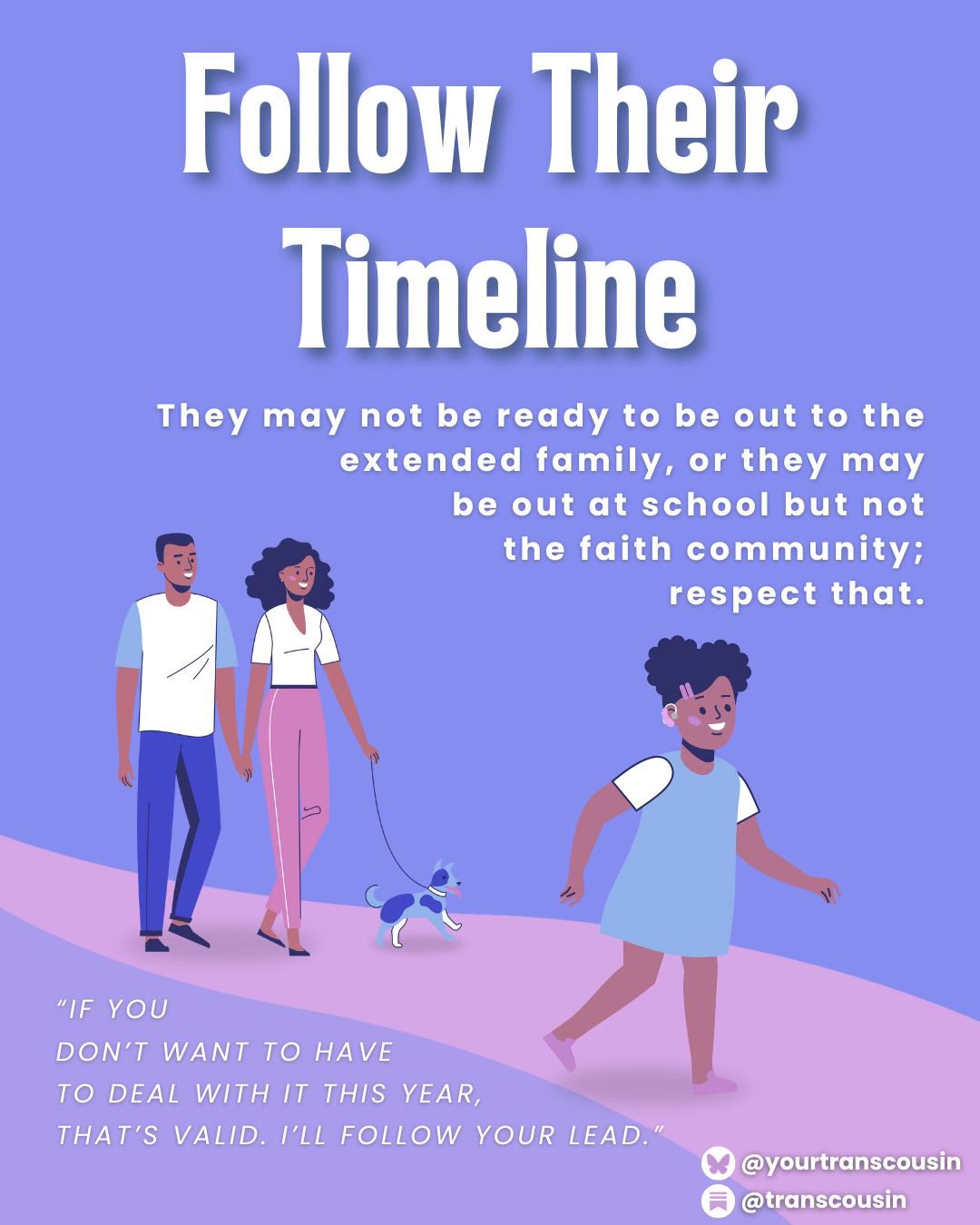
Follow their timeline. They may not be ready to be out to the extended family, or they may be out at school but not the faith community; respect that.
If you don’t want to have to deal with it this year, that’s valid. I’ll follow your lead.
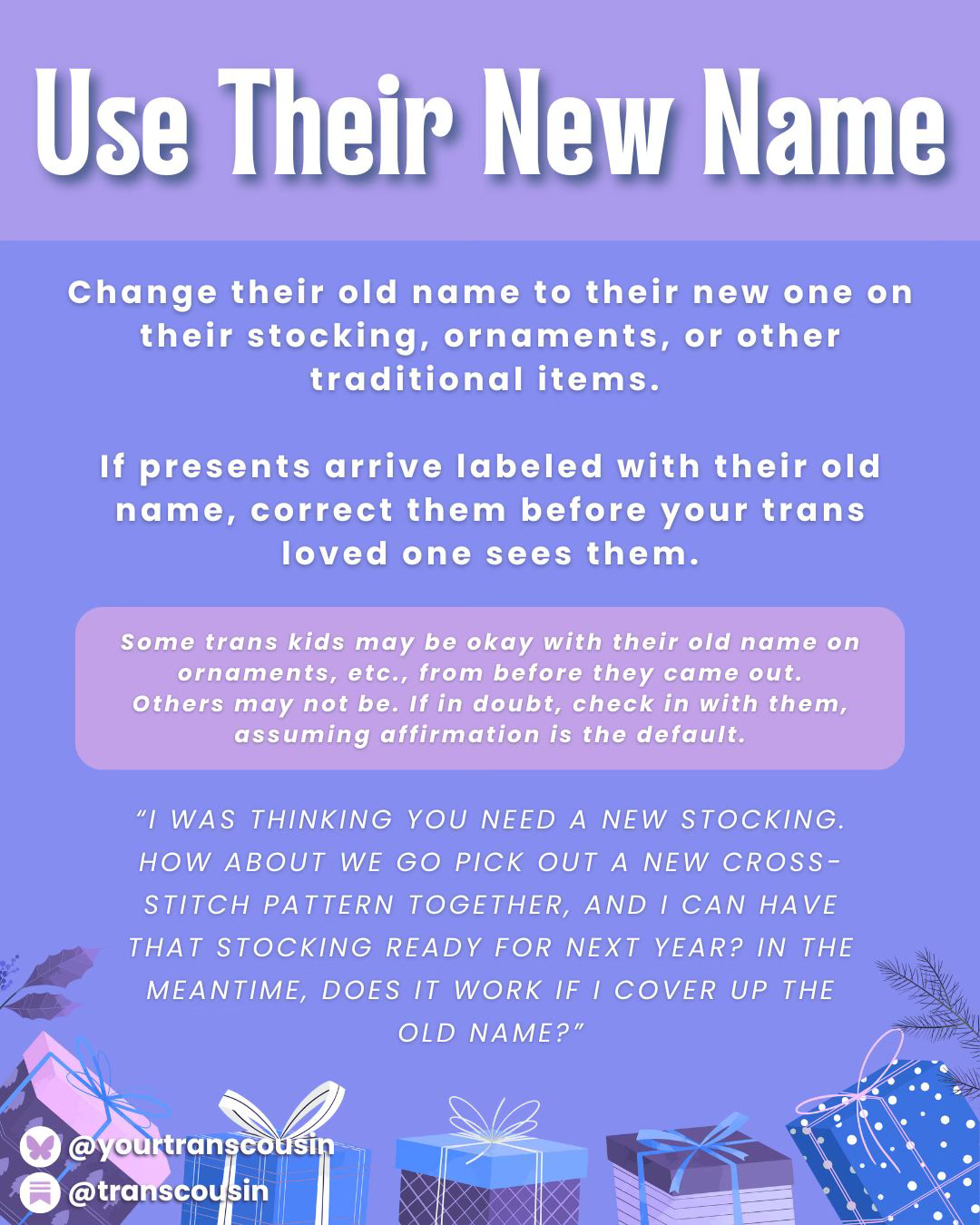
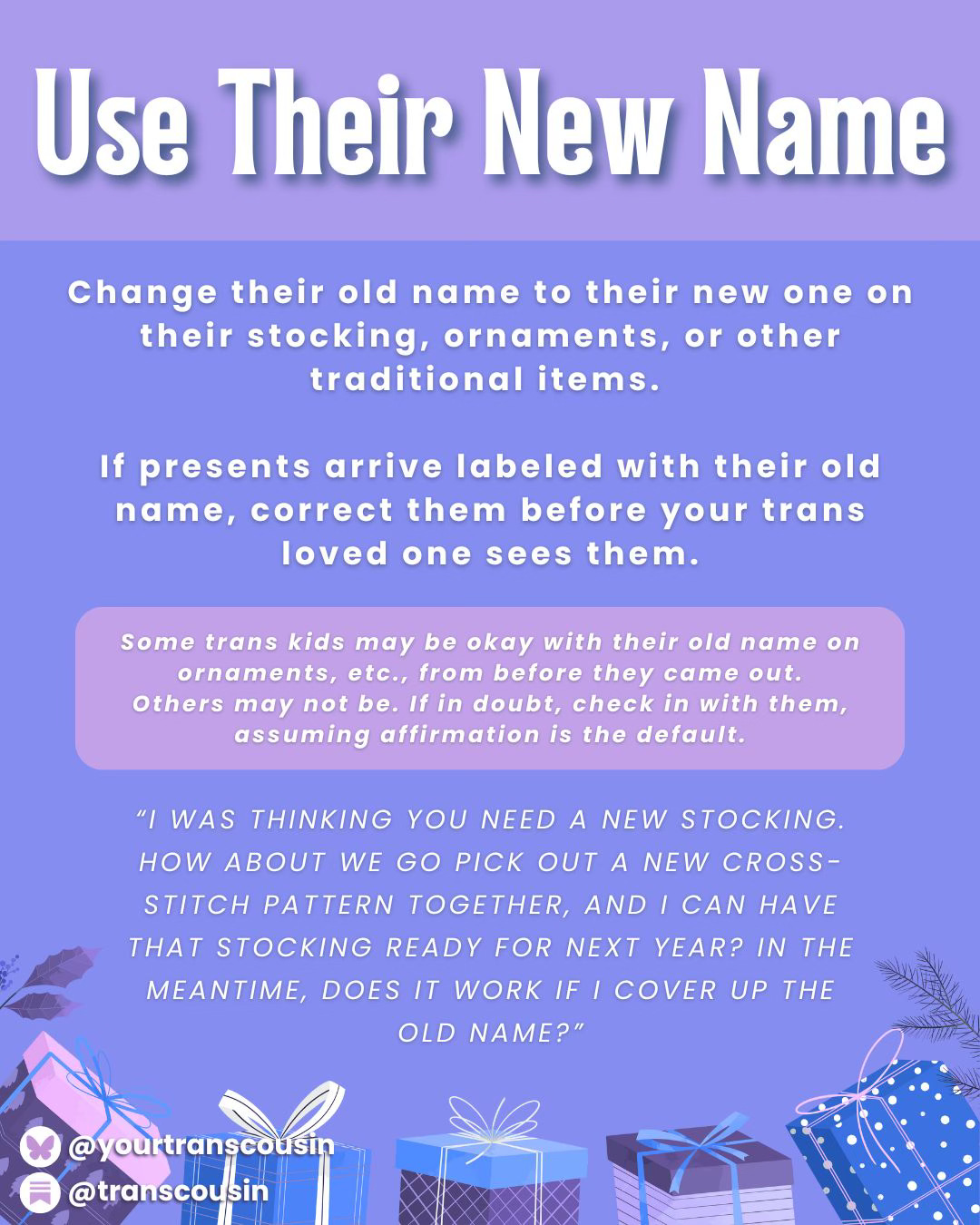
Use their new name. Change their old name to their new one on their stocking, ornaments, or other traditional items. If presents from relatives arrive with their old name on the label, correct them before your trans loved one sees them. (Some trans kids may be okay with their old name on ornaments, etc., from before they came out. Others may not be. If in doubt, check in with them, assuming affirmation is the default.)
Okay, I was thinking you need a new stocking. How about we go pick out a new cross-stitch pattern together, and I can have that stocking ready for next year? In the meantime, does it work if I cover up the old name?
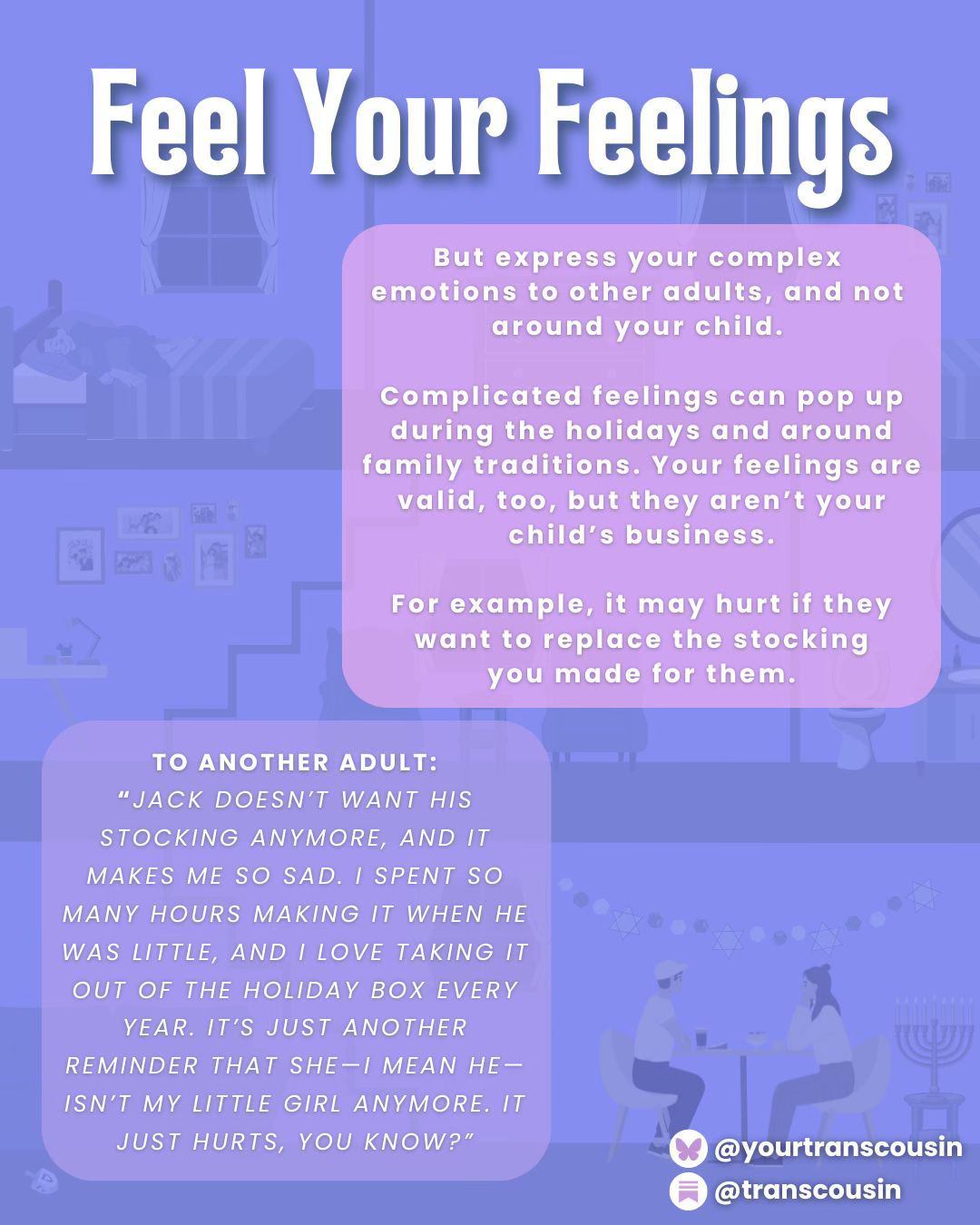
Feel your feelings, but express your complex emotions to other adults, and not around your child. Complicated feelings can pop up during the holidays and around family traditions. Your feelings are valid, too, but they aren’t your child’s business. For example, it may hurt if they want to replace the stocking you made for them.
To another adult: Jack doesn’t want his stocking anymore, and it makes me so sad. I spent so many hours making it when he was little, and I love taking it out of the holiday box every year. It’s just another reminder that she—I mean he—isn’t my little girl anymore. It just hurts, you know?

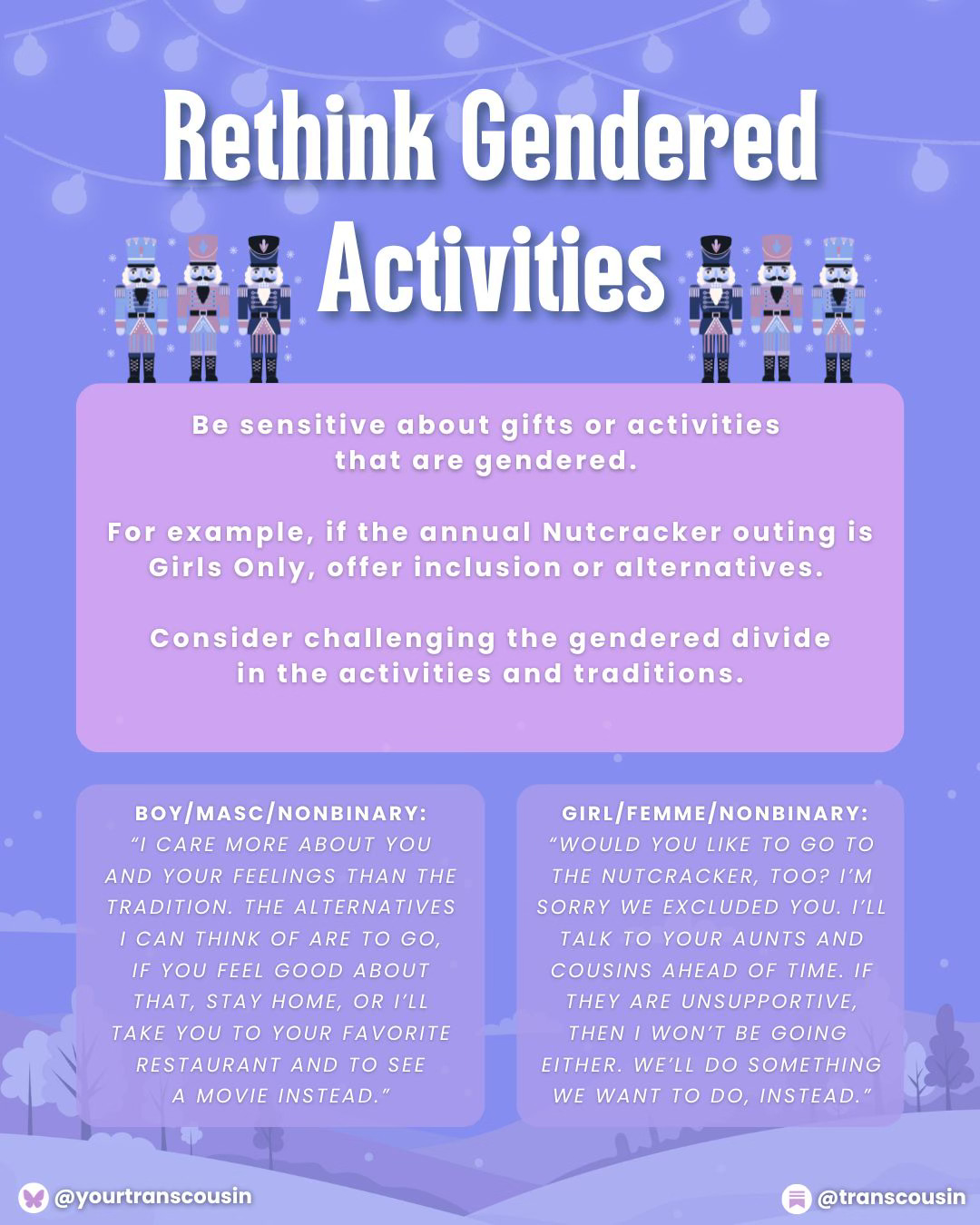
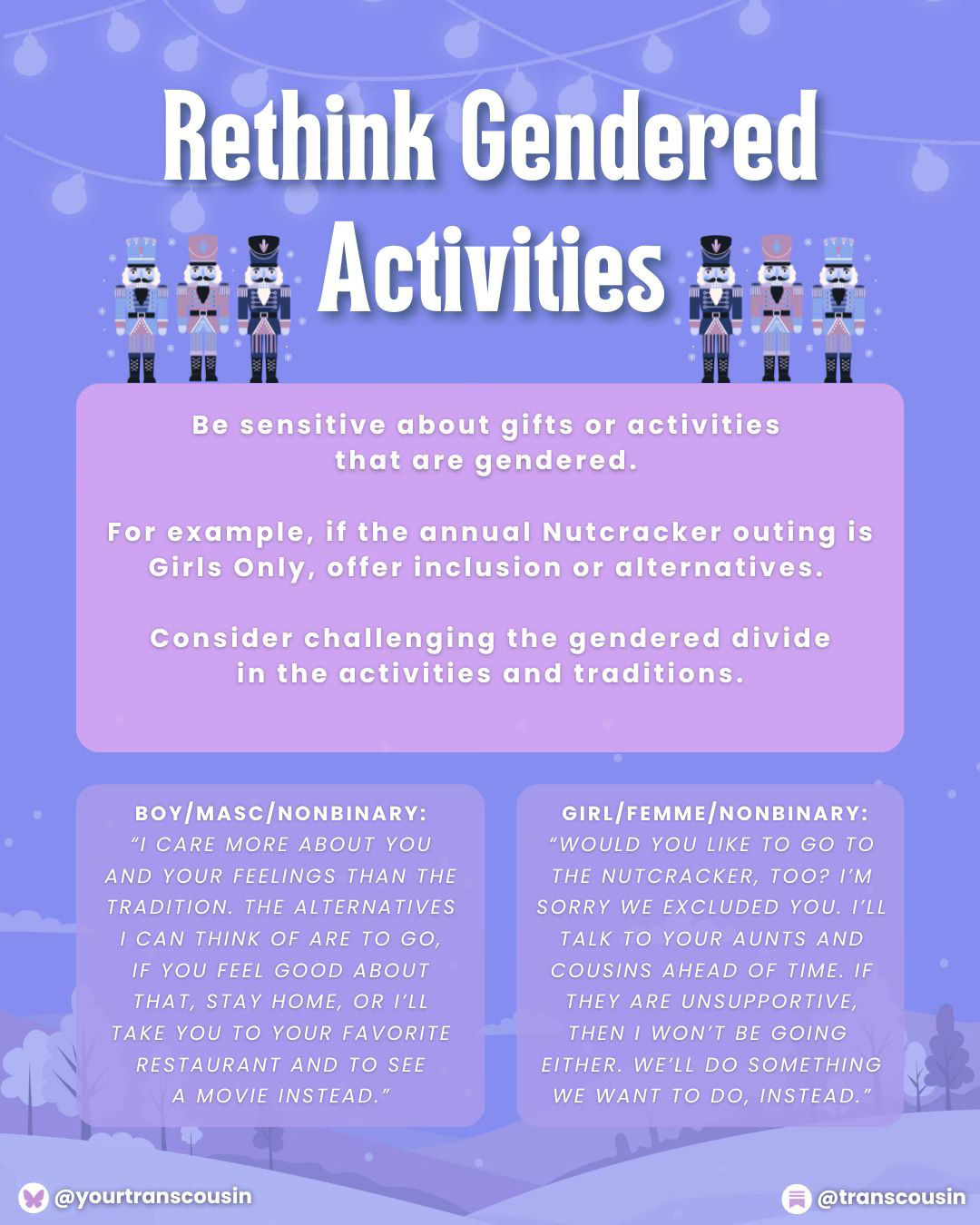
Rethink gendered activities. Be sensitive about gifts or activities that are highly gendered. For example, if the annual Nutcracker outing is girls only, offer inclusion or alternatives, depending on their gender. Consider challenging the gendered divide in the activities and traditions.
For a trans boy/masc/nonbinary child: I care more about you and your feelings than the tradition. The alternatives I can think of are to go, if you feel good about that, stay home, or I’ll take you to your favorite restaurant and to see a movie instead.
For a trans girl/femme: Would you like to go to the Nutcracker, too? I’m sorry we excluded you. I’ll talk to your aunts and cousins ahead of time. If they are unsupportive, then I won’t be going either. We’ll do something we want to do, instead.
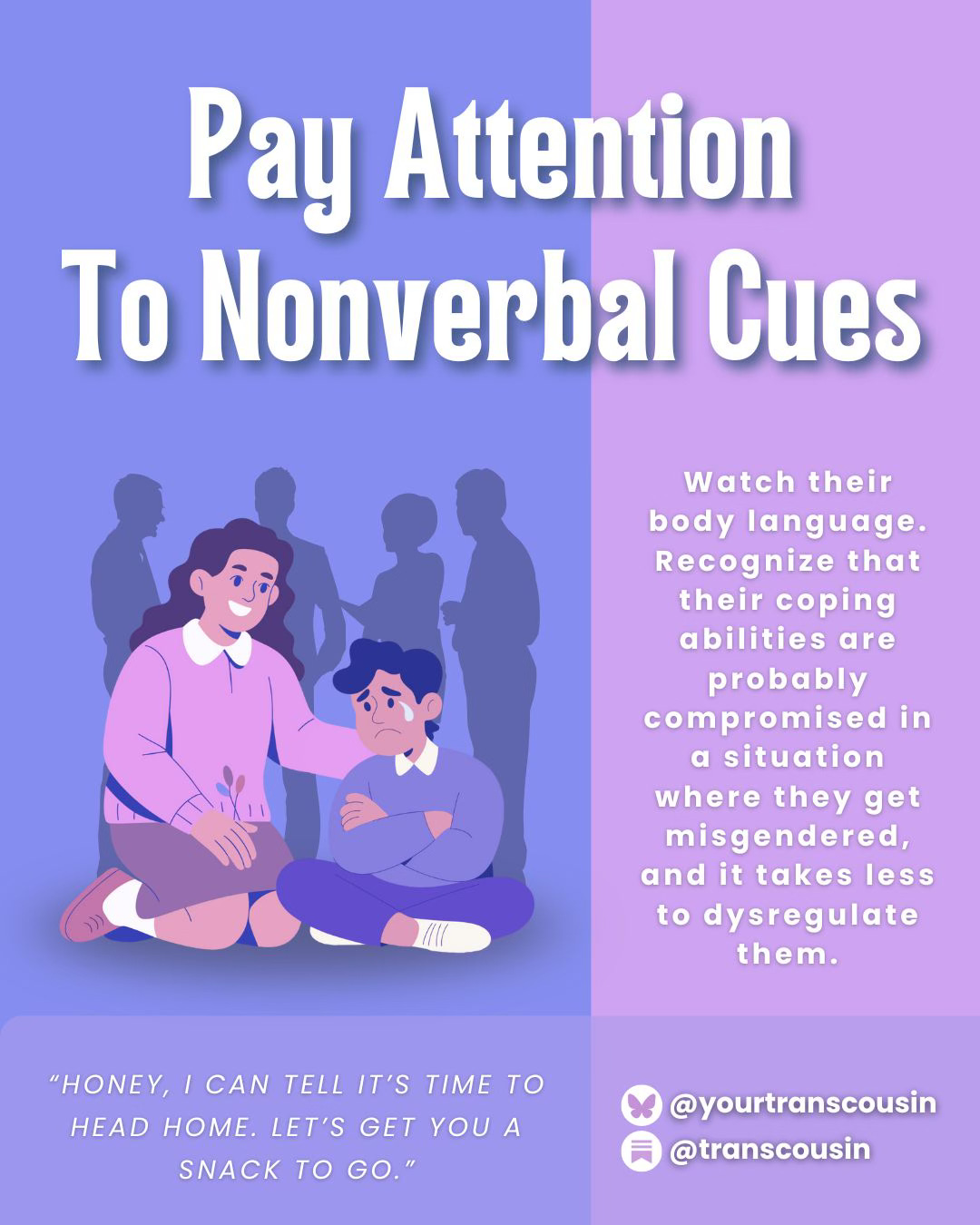
Pay attention to nonverbal cues and body language. Recognize that their coping abilities are probably compromised in a situation where they get misgendered, and it takes less to dysregulate them.
Honey, I can tell it’s time to head home. Let’s get you a snack to go.
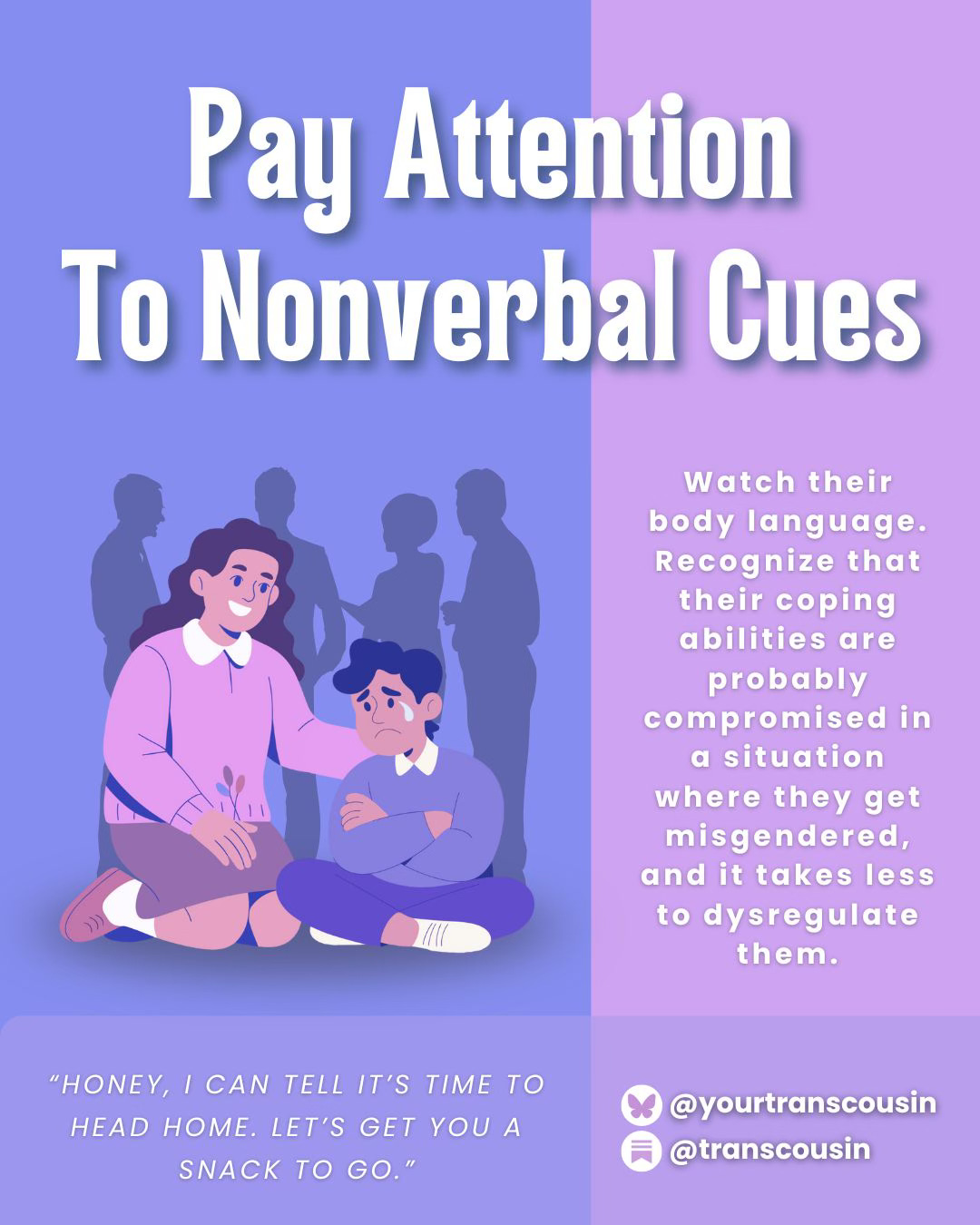
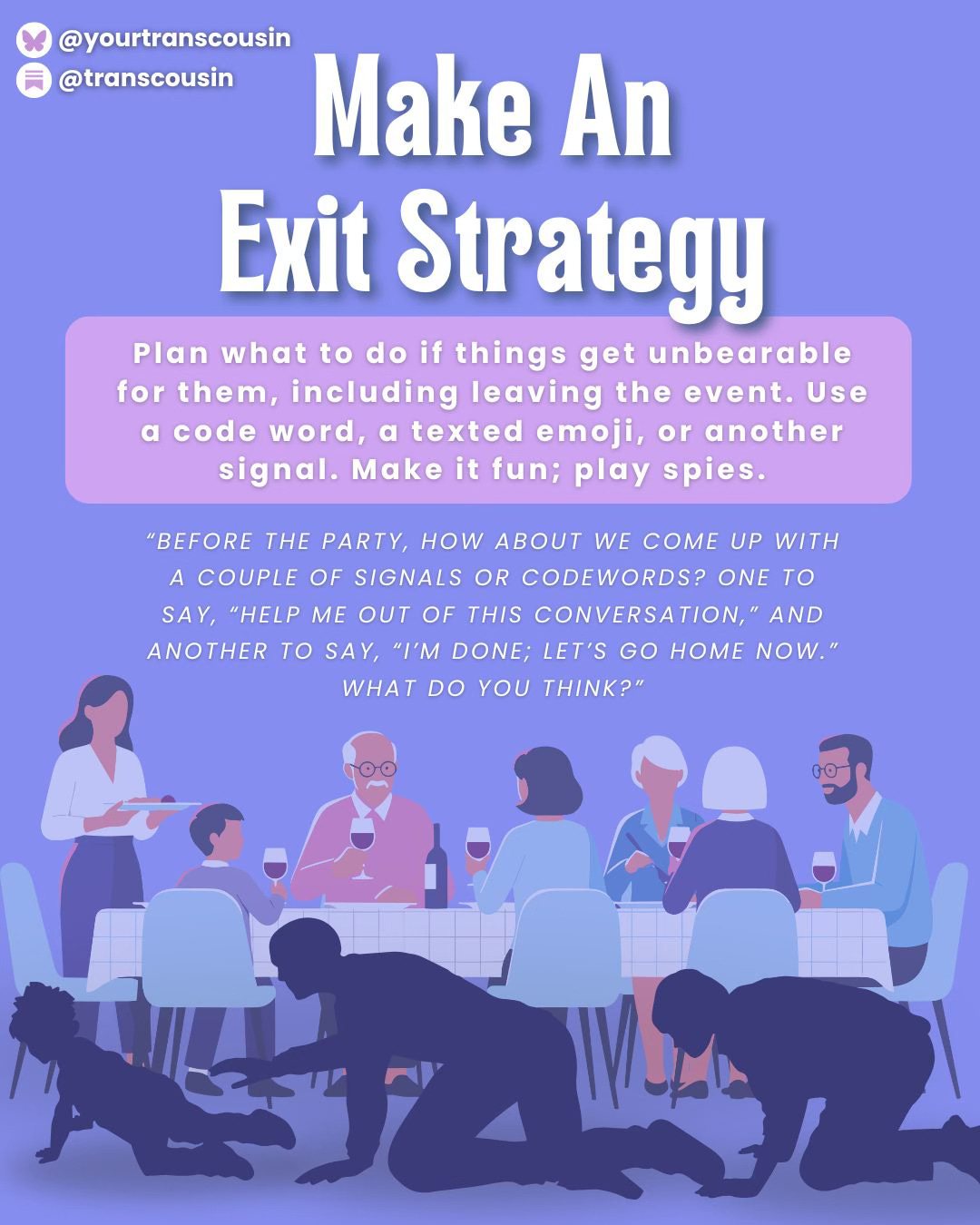
Make an exit strategy. Plan what to do if things get unbearable for them, including leaving the event. Use a code word, a texted emoji, or another signal. Make it fun; play spies.
Before the party, how about we come up with a couple of signals or codewords? One to say, “help me out of this conversation,” and another to say, “I’m done; let’s go home now.” What do you think?
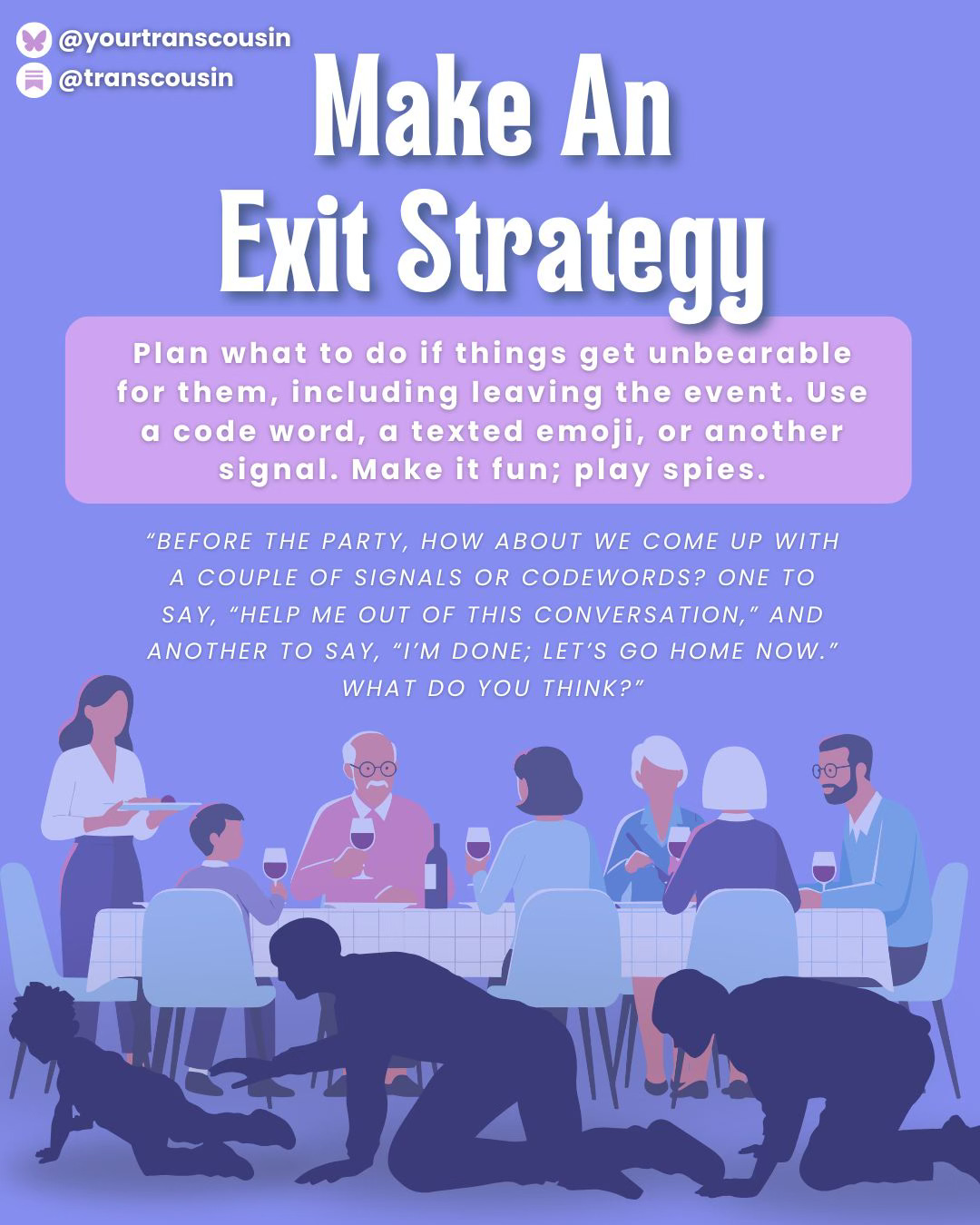
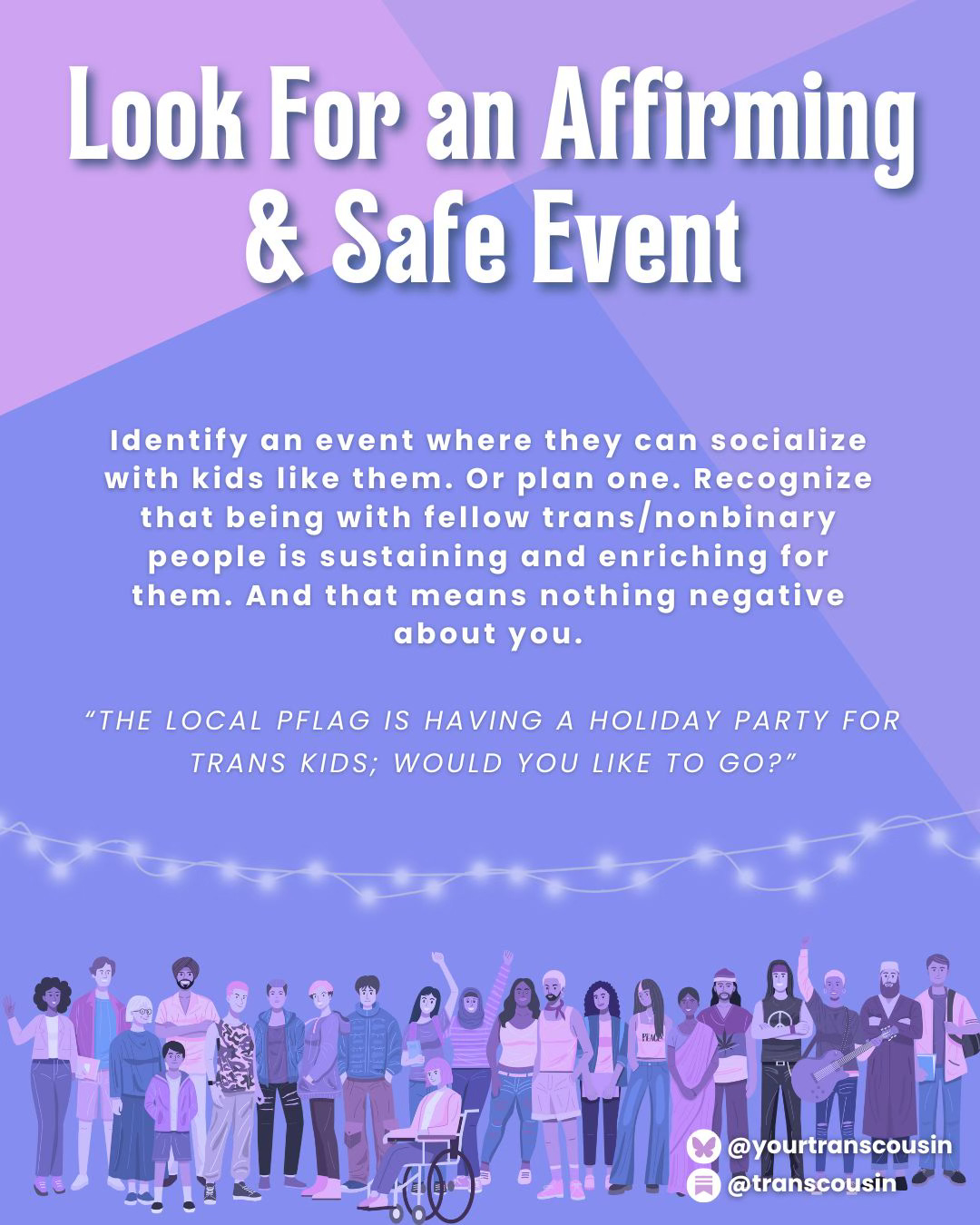
Look for an affirming/ safe event where they can socialize with kids like them. Or plan one. Recognize that being with fellow trans/nonbinary people is sustaining and enriching for them. And that means nothing negative about you.
The local PFLAG is having a holiday party for trans kids; would you like to go?

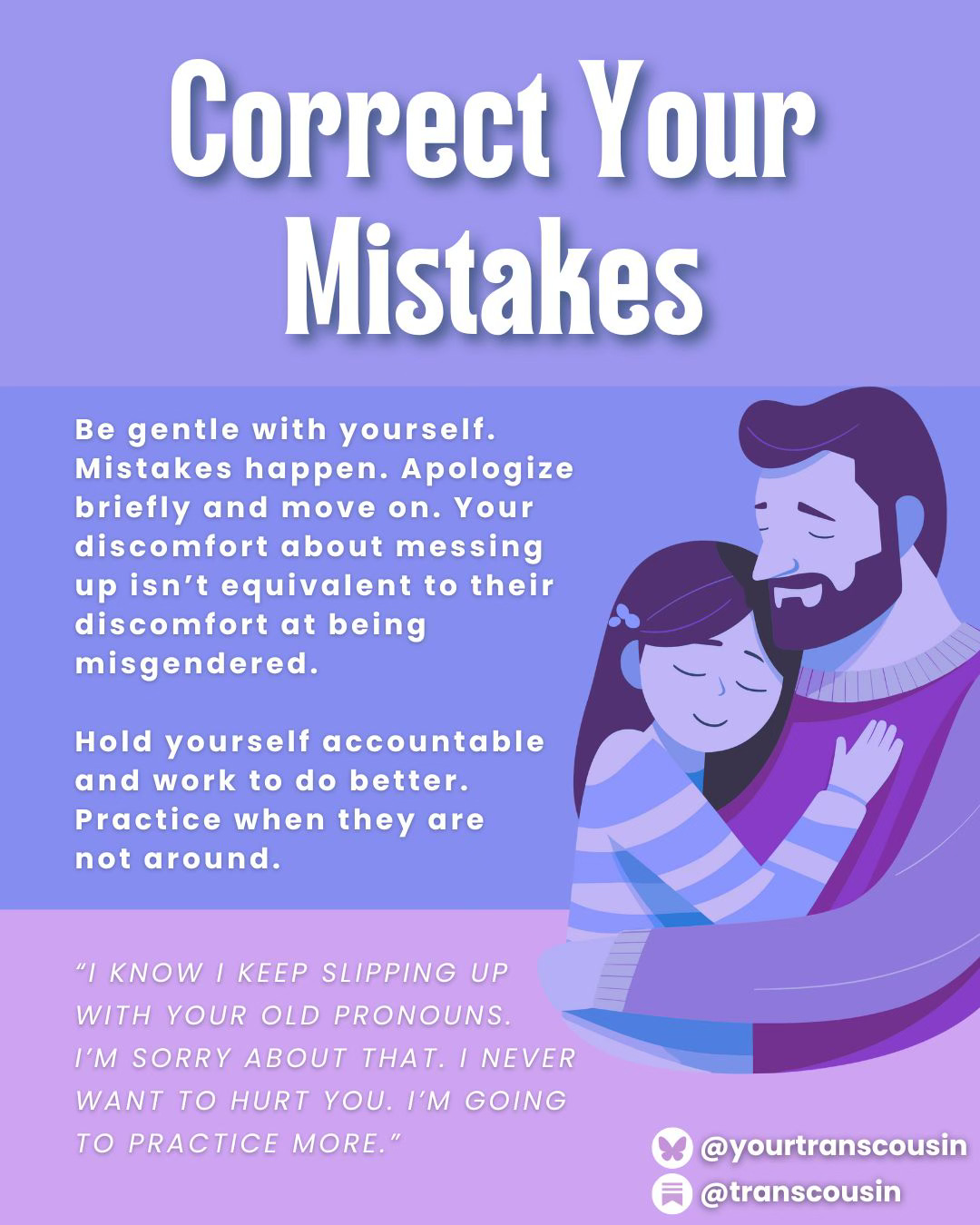
Correct your mistakes. Be gentle with yourself; mistakes happen. Apologize briefly and move on; your discomfort about messing up isn’t equivalent to their discomfort at being misgendered. Hold yourself accountable and work to do better—practice when they are not around.
I know I keep slipping up with your old pronouns. I’m sorry about that. I never want to hurt you. I’m going to practice more.
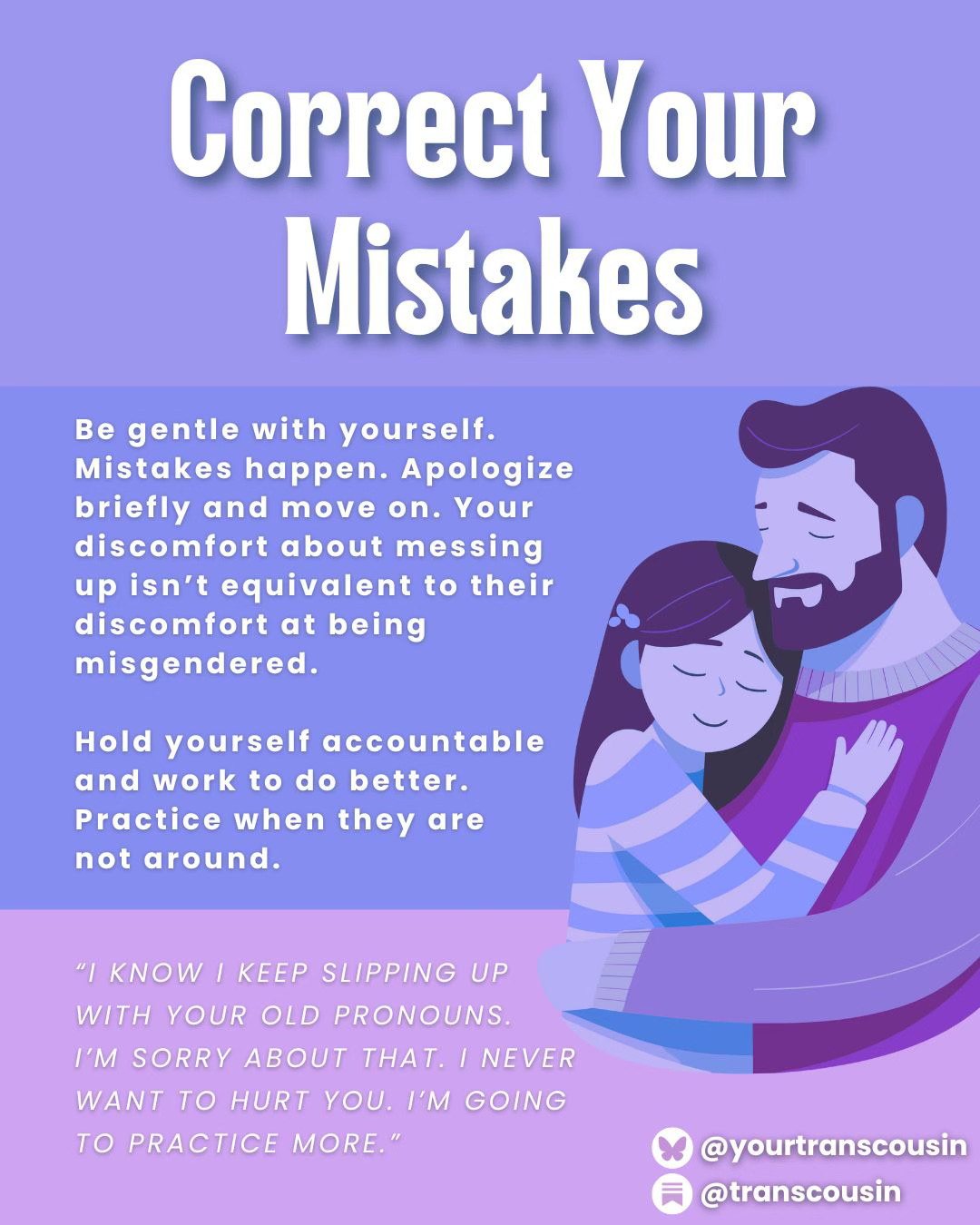
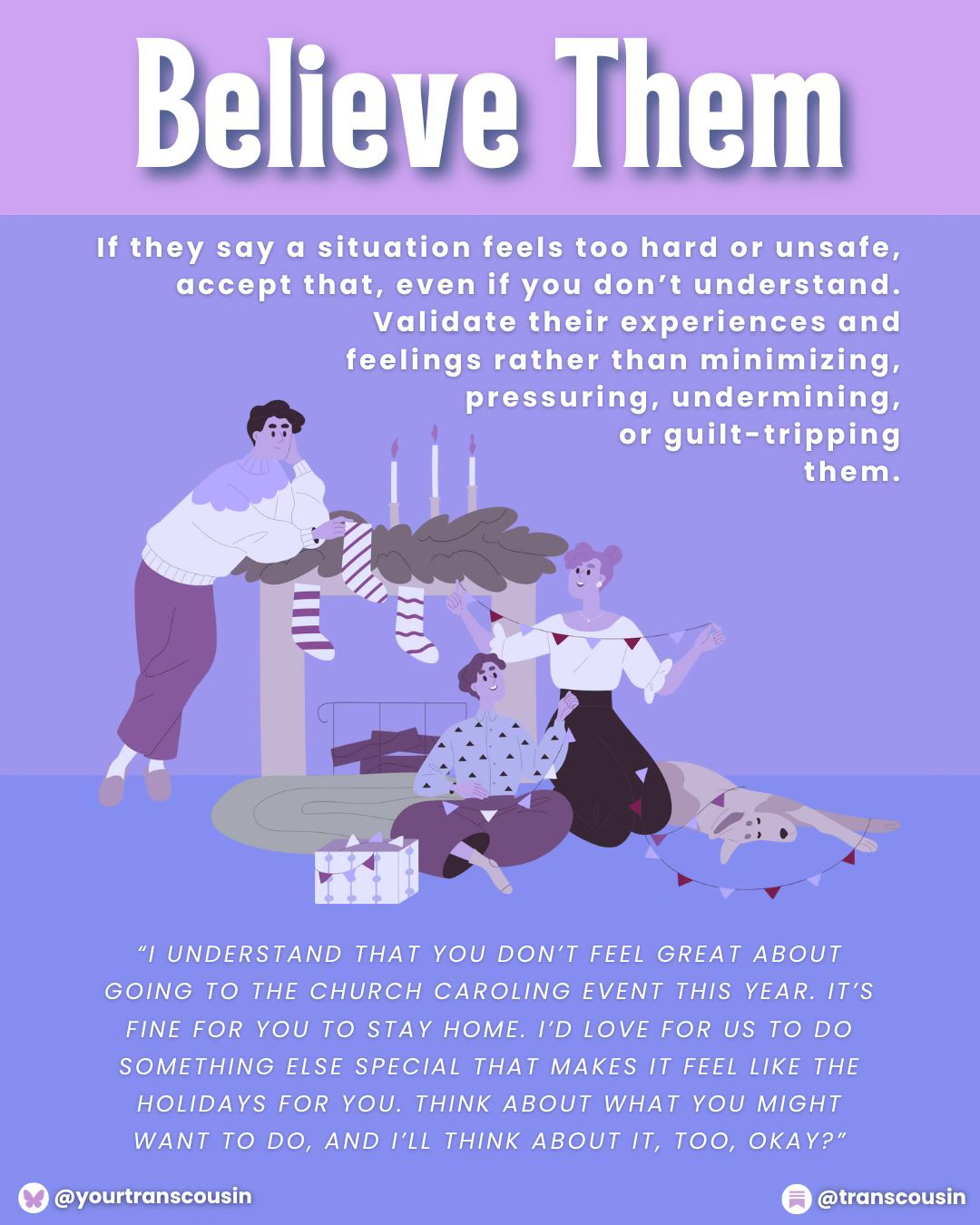
Believe them. If they say a situation feels too hard or unsafe, accept that, even if you don’t understand. Validate their feelings and experiences rather than undermining, minimizing, pressuring, or guilt-tripping them.
I understand that you don’t feel great about going to the church caroling event this year. It’s fine for you to stay home. I’d love for us to do something else special that makes it feel like the holidays for you. Think about what you might want to do, and I’ll think about it, too, okay?
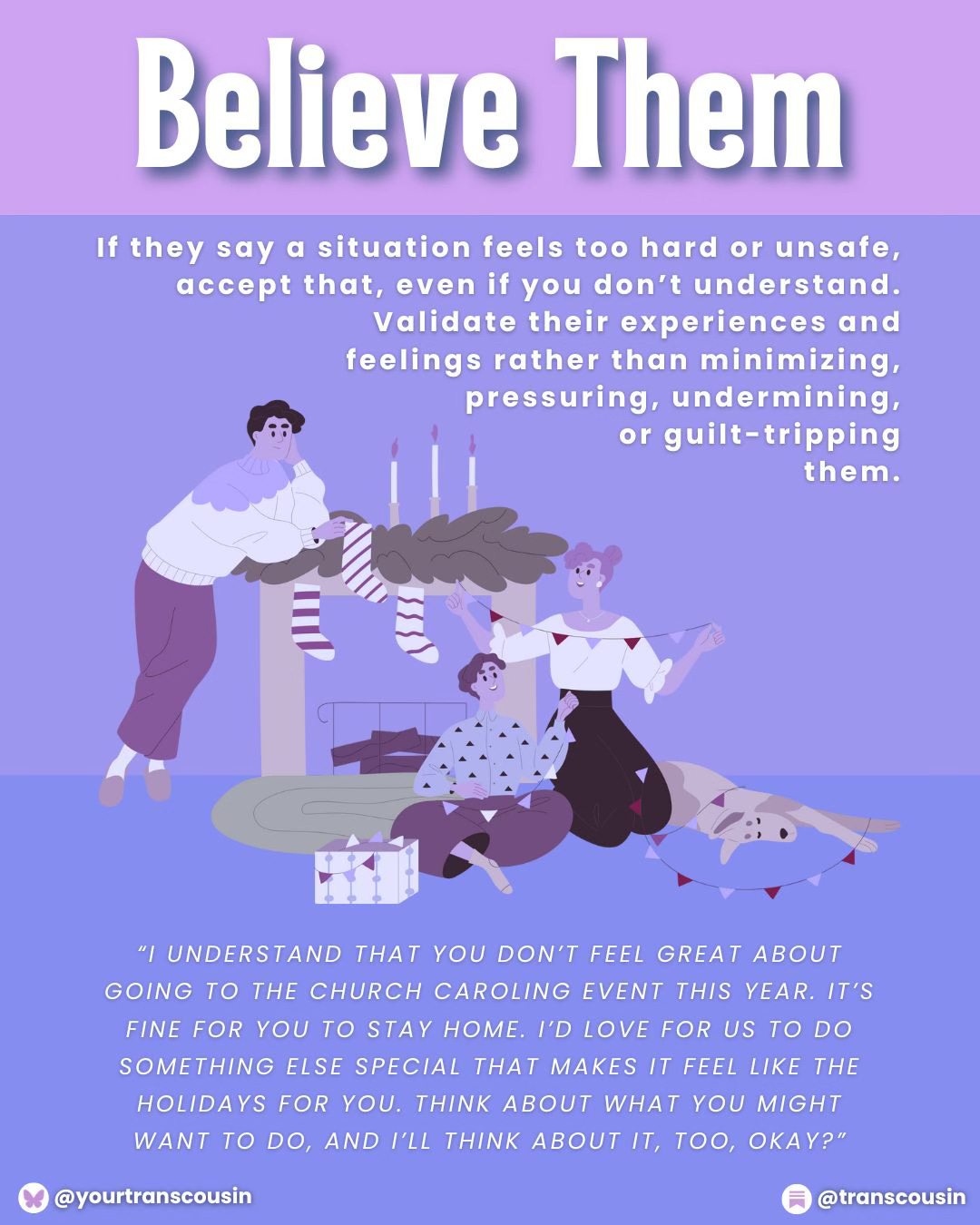
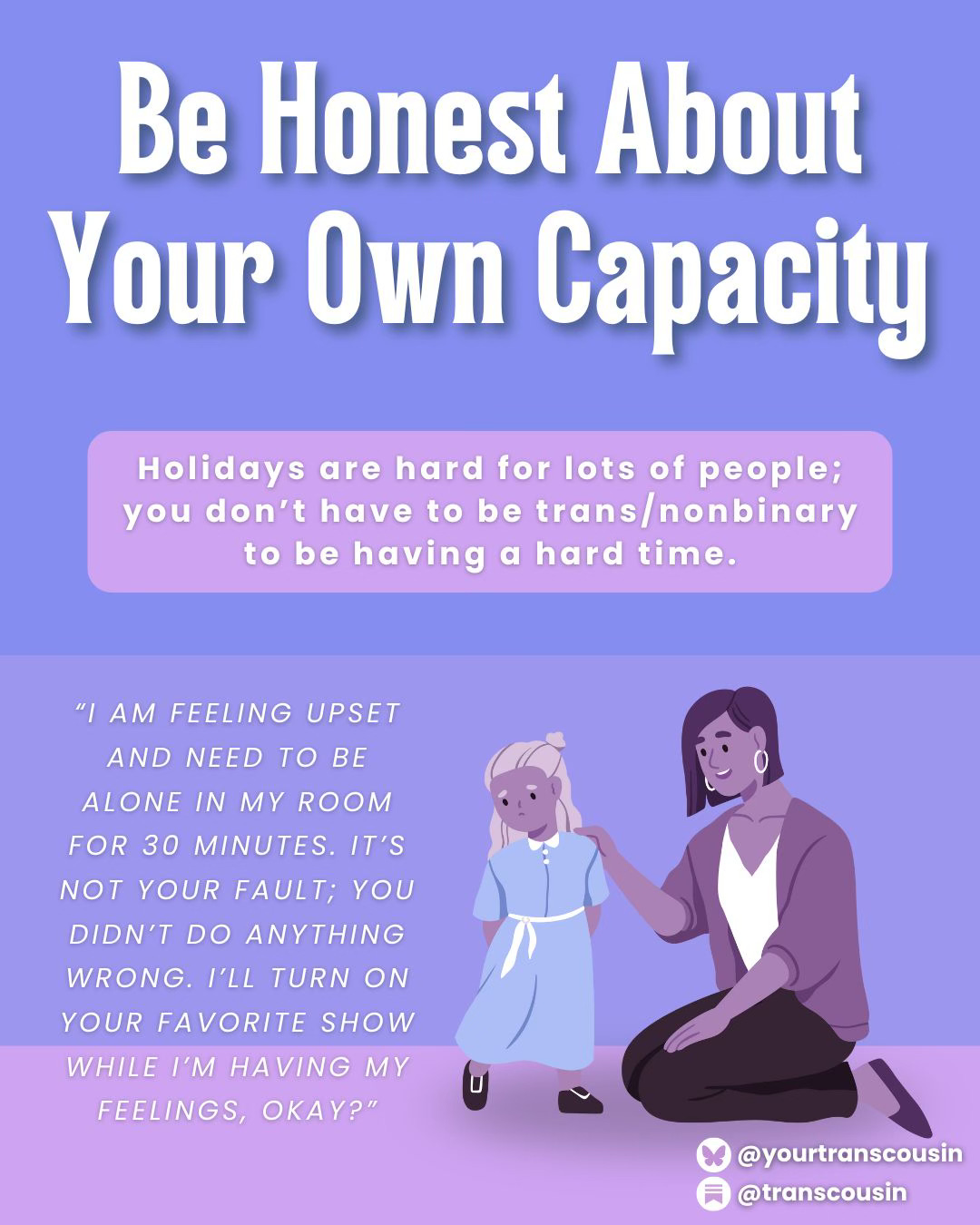
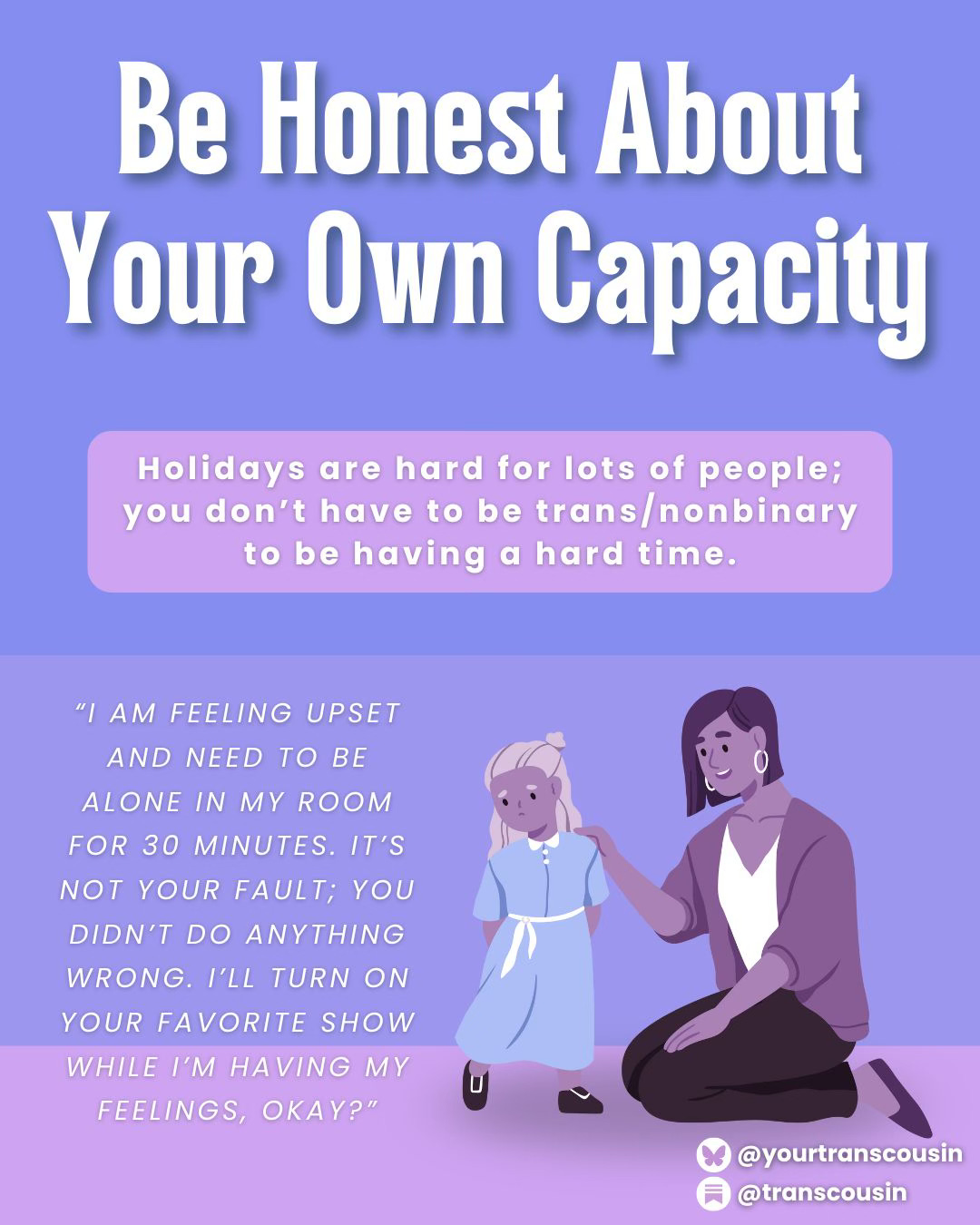
Be honest about your own capacity. Holidays are hard for lots of people; you don’t have to be trans/nonbinary to be having a hard time.
I am feeling upset and need to be alone in my room for 30 minutes. It’s not your fault; you didn’t do anything wrong. I’ll turn on your favorite show while I’m having my feelings, okay?
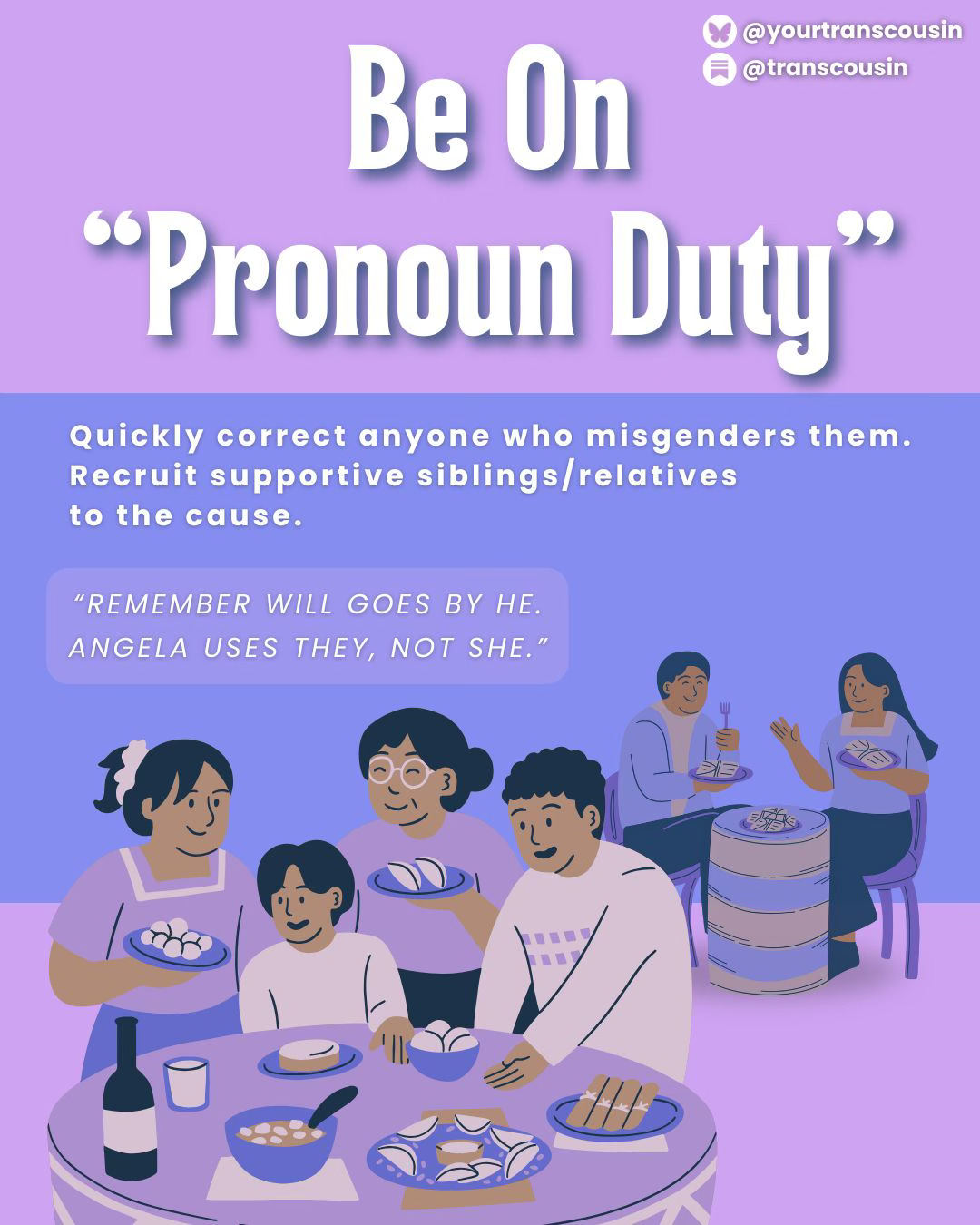
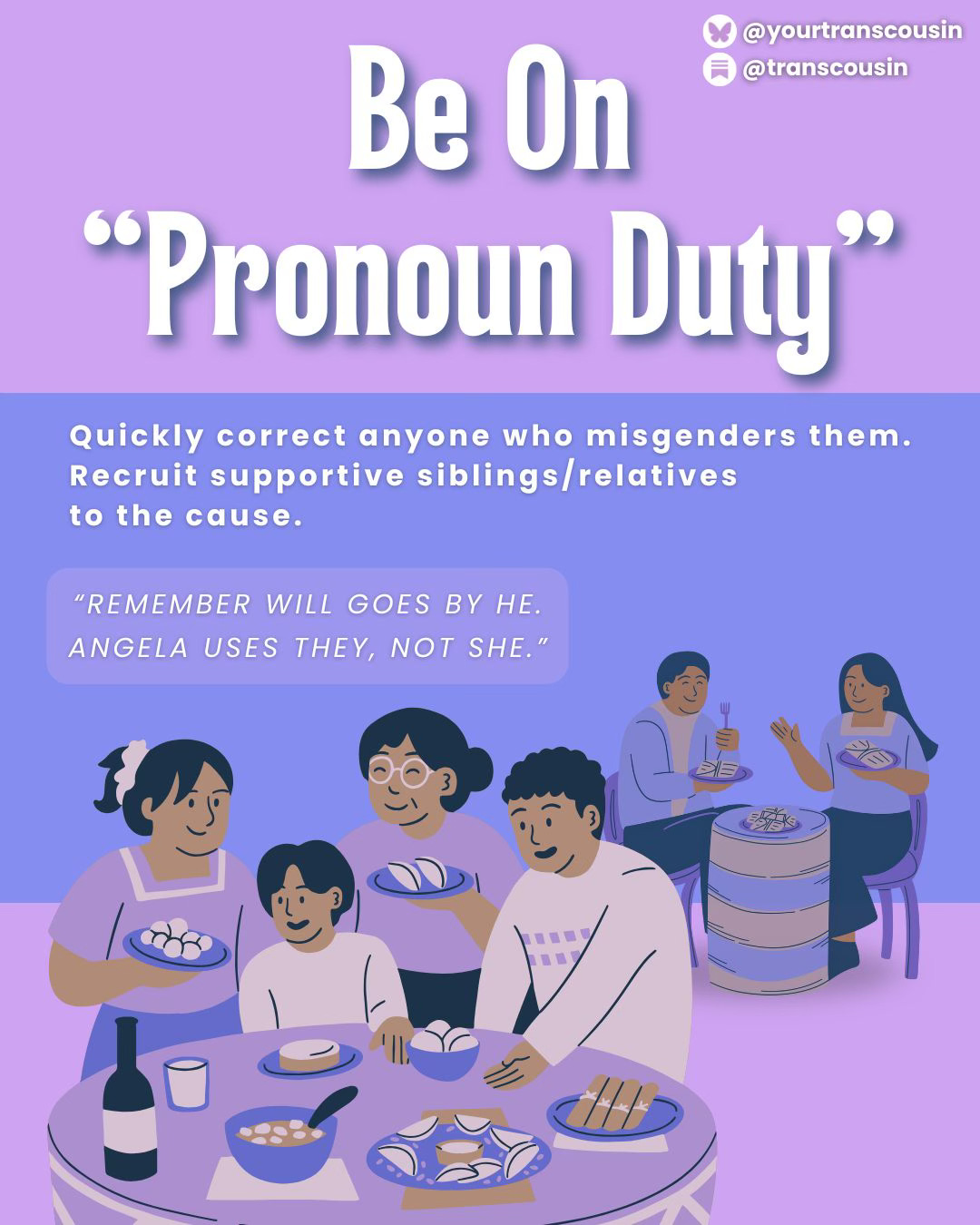
Be on “pronoun duty,” quickly correcting anyone who misgenders them. Recruit supportive siblings/relatives to the cause.
Remember Will goes by he.
Angela uses they, not she.
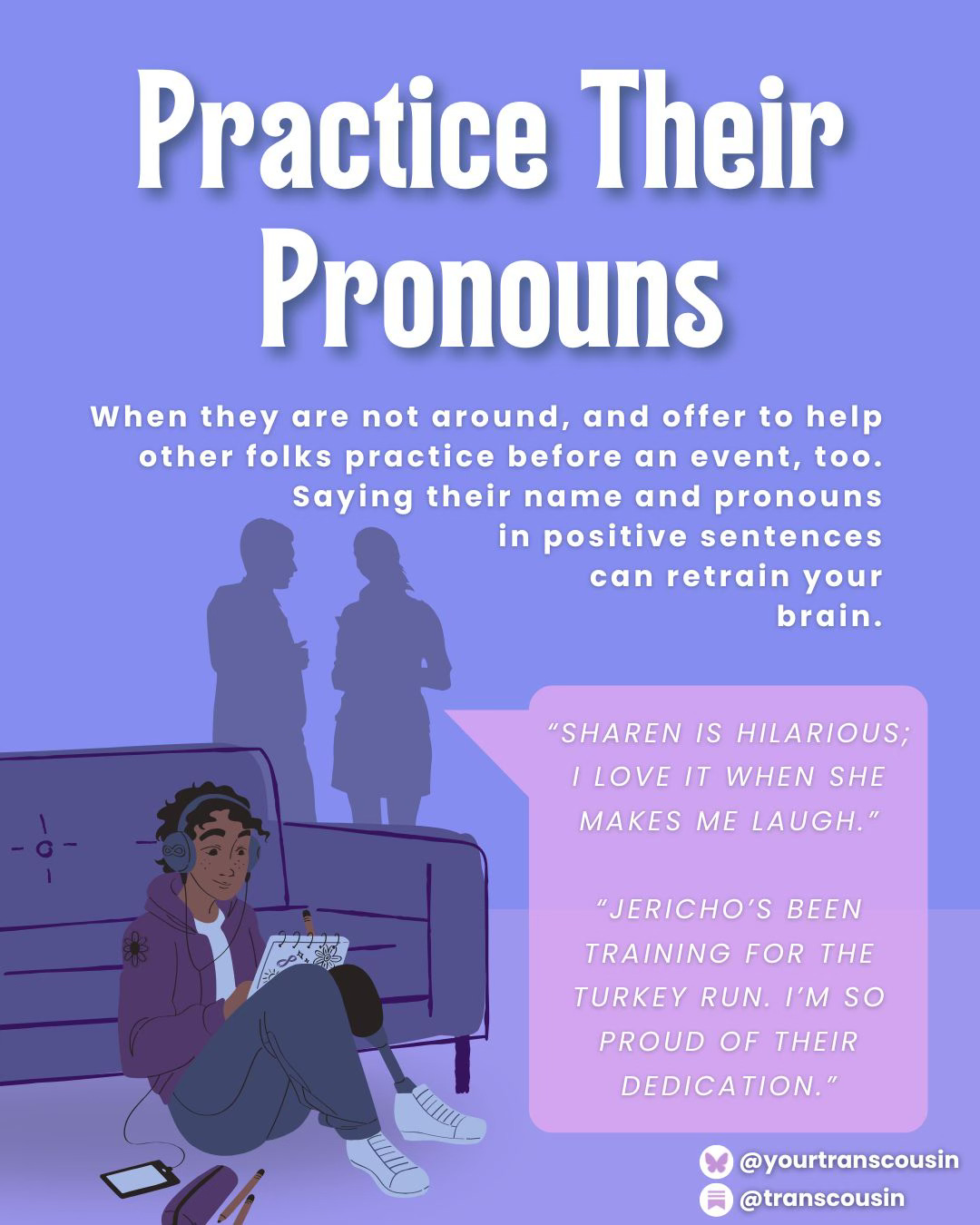
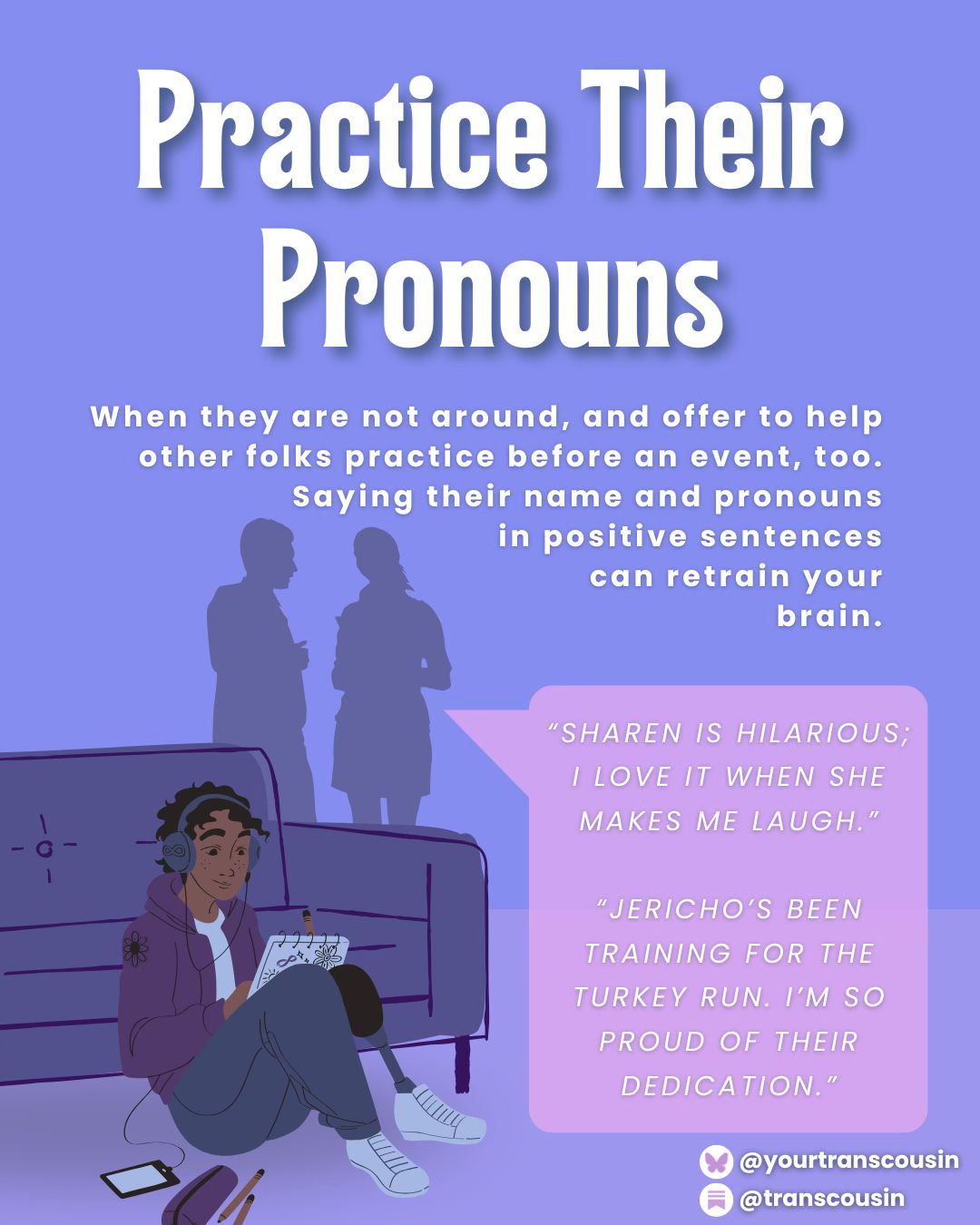
Practice their pronouns when they are not around, and offer to help other folks practice before an event, too. Saying their name and pronouns in positive sentences can retrain your brain.
Sharen is hilarious; I love it when she makes me laugh.
Jericho’s been training for the Turkey Run. I’m so proud of their dedication.
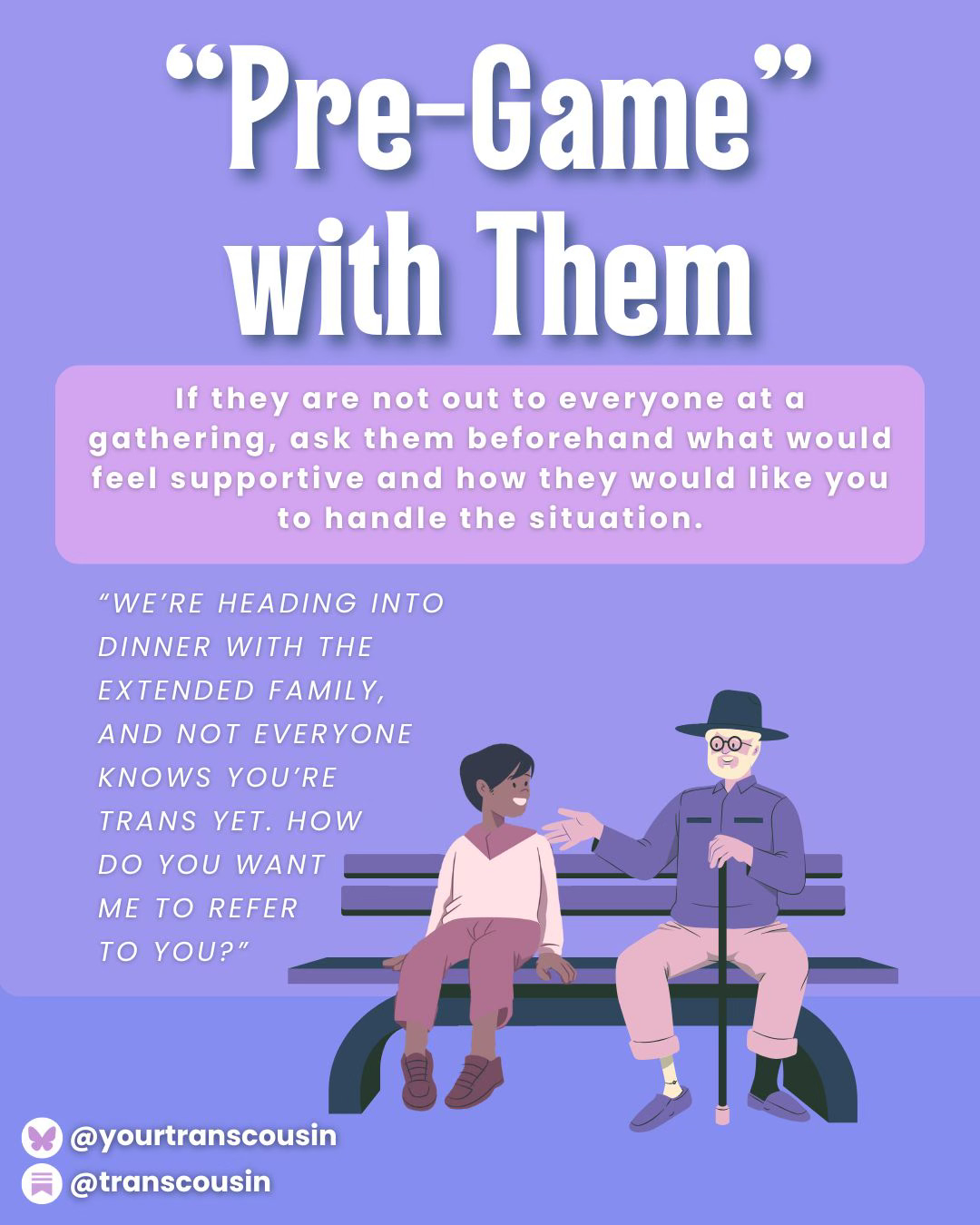
Pre-game with them. If they are not out to everyone at a gathering, ask them beforehand what would feel supportive and how they would like you to handle the situation.
We’re heading into dinner with the extended family, and not everyone knows you’re trans yet. How do you want me to refer to you?

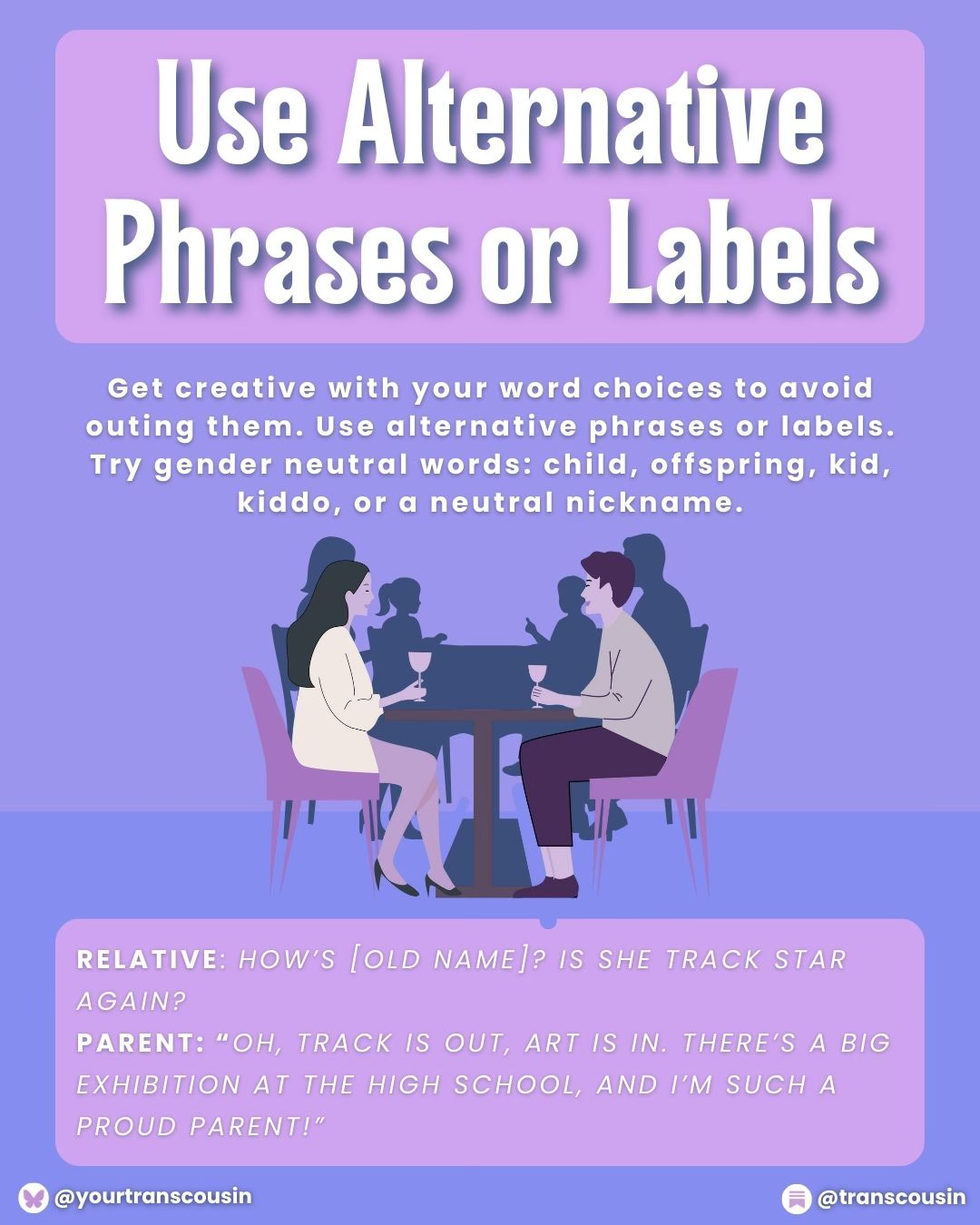
Use alternative phrases or labels. Get creative with your word choices to avoid outing them. Use alternative phrases or labels. Try gender neutral words: child, offspring, kid, kiddo, or a neutral nickname.
Relative: How’s [old name] doing? Is he still running on the track team?
Parent: Oh, track is out, art is in.

I hope these tips can help your trans loved ones have a better holiday season!
Wish I'd had access to this when my daughter came out, even though she was no longer a child. Wonderful reminders and examples. Thank you for these tips in such a positive way, nonjudgmental manner.
Thank you for writing this. 🙏🏽