

Tips & Scripts for Supporting Trans & Nonbinary Loved Ones
Allyship is a Practice

Friends,
I hope you find these “Tips & Scripts” useful. Tips are action items. Scripts give examples of what to say when discussing key topics with or about trans/nonbinary folks.
Accessibility note: Rather than put the text in alt-text, I’ve typed the Tips & Scripts out above each image. Alt-text includes descriptions of the images without the text.
I’ve adapted the Tips & Scripts I shared for the winter holidays for all year.
These new ones are also available on Canva and on my IG account and are shareable.
Tip: Be a safe person. Ensure your home is a safe place.
Script: I’m so glad you came to me to talk about this. We’ll figure this out together."

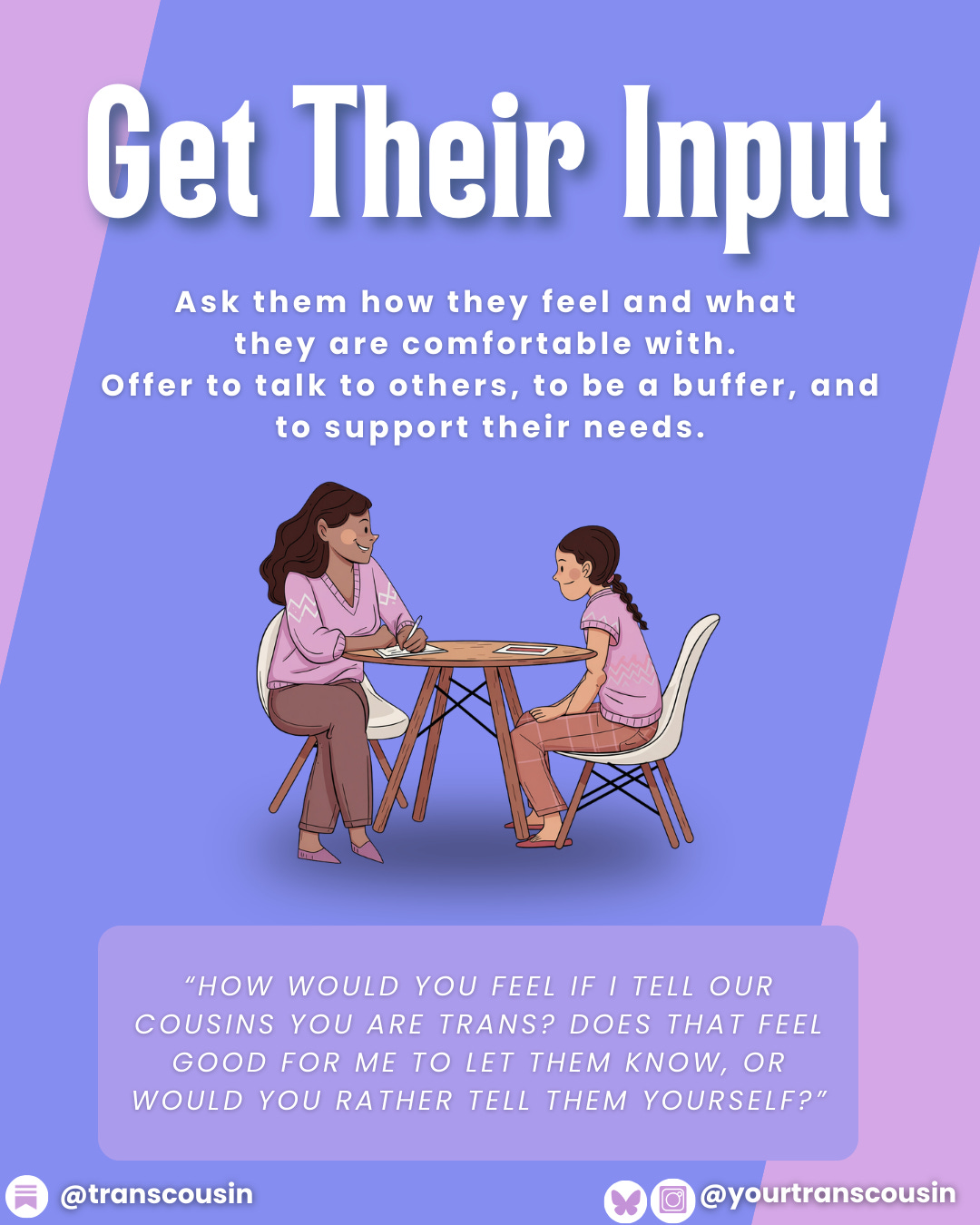
Tip: Get their input. Ask them how they feel and what they are comfortable with. Offer to talk to others, to be a buffer, and to support their needs.
Script: How would you feel if I told our cousins you are trans? Does that feel good for me to let them know, or would you rather tell them yourself?
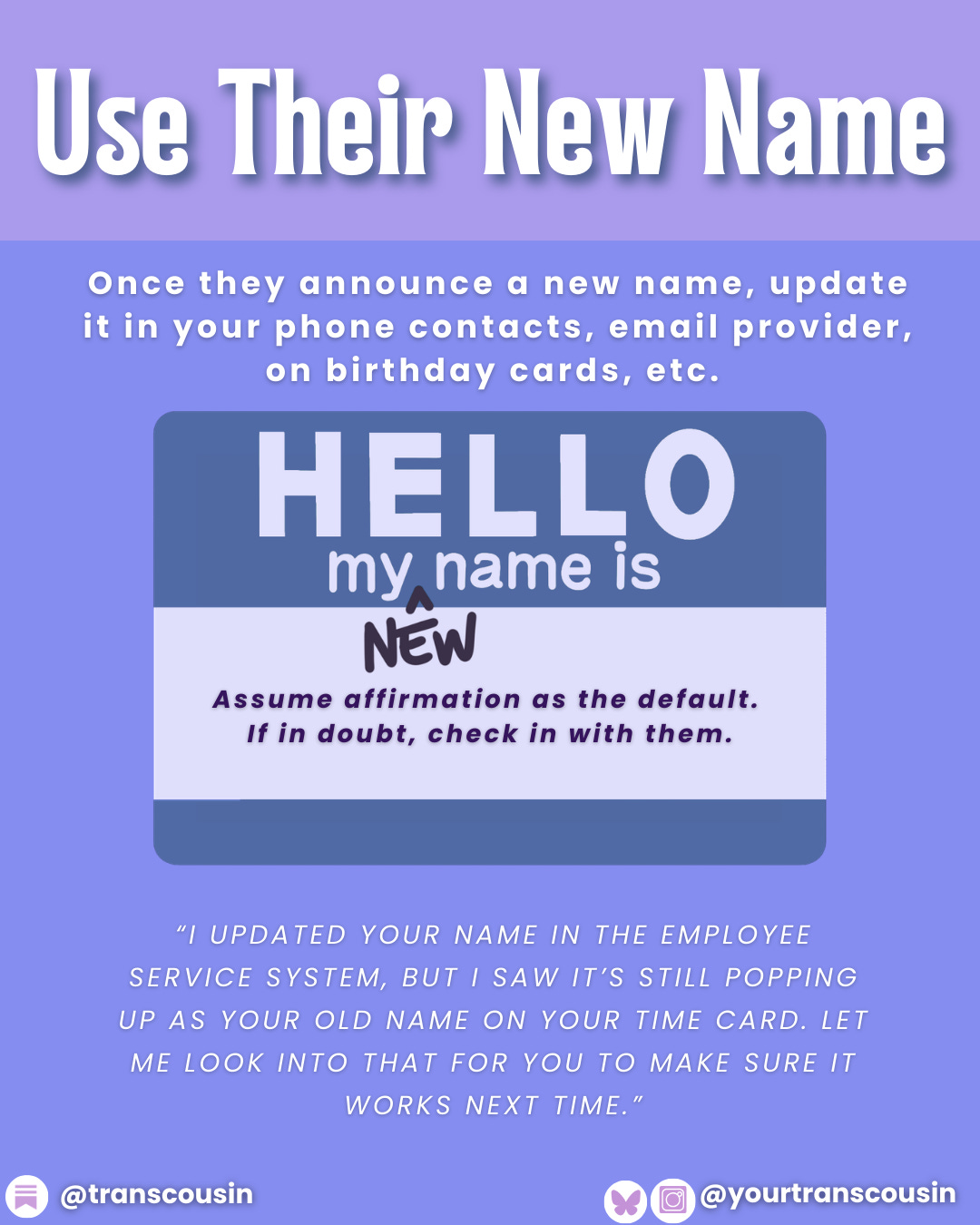
Tip: Use their new name. Once they announce a new name, update it in your phone contacts, email provider, on birthday cards, etc. Assume affirmation as the default. If in doubt, check in with them.
Script: I updated your name in the employee service system, but I saw it’s still popping up as your old name on your time card. Let me look into that for you to make sure it works next time.
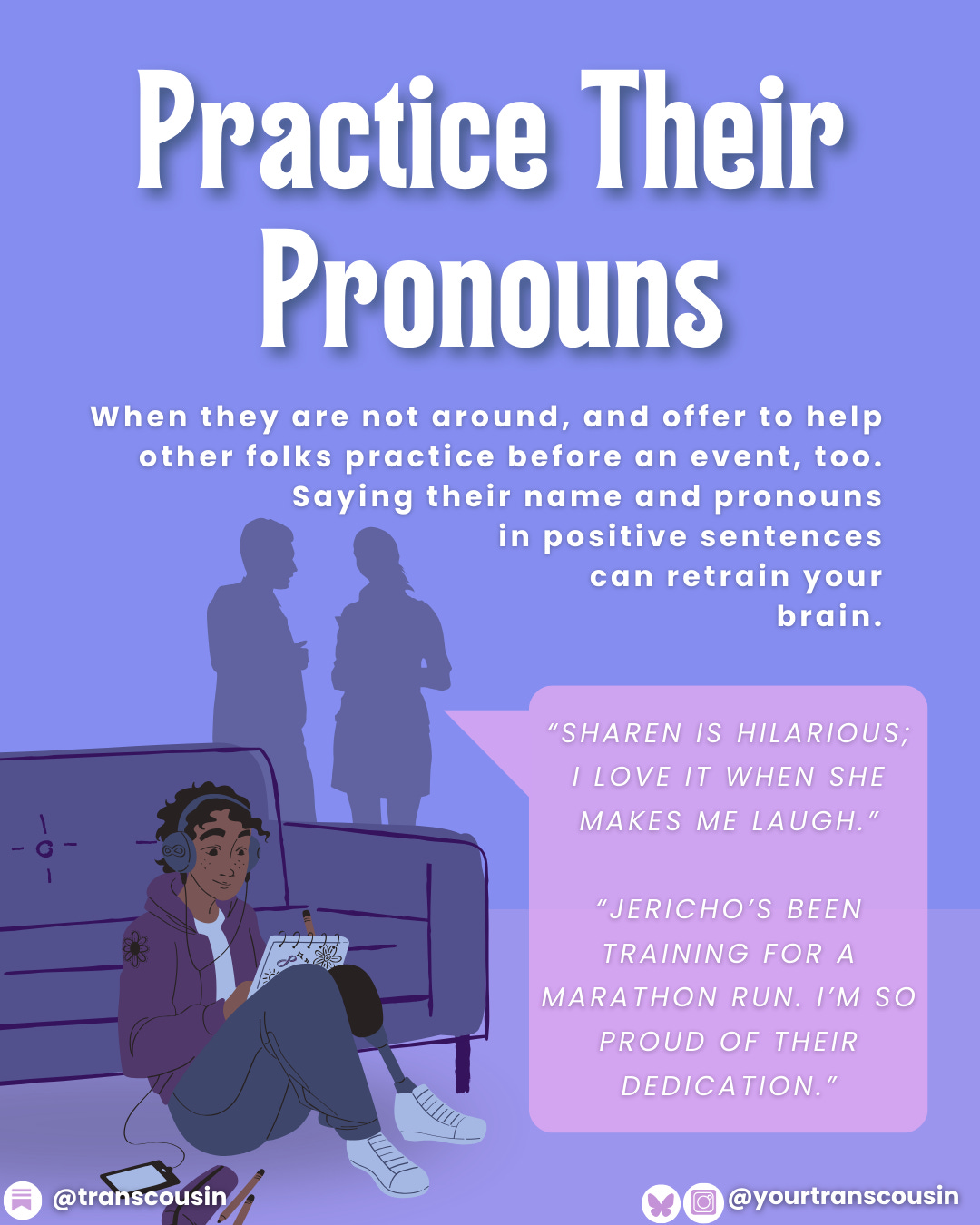
Tip: Practice their pronouns when they are not around and offer to help other folks practice, before an event, too. Saying their name and pronouns in positive sentences can retrain your brain.
Script: Sharen is hilarious; I love it when she makes me laugh.
Script: Jericho’s been training for a marathon. I’m so proud of their dedication.
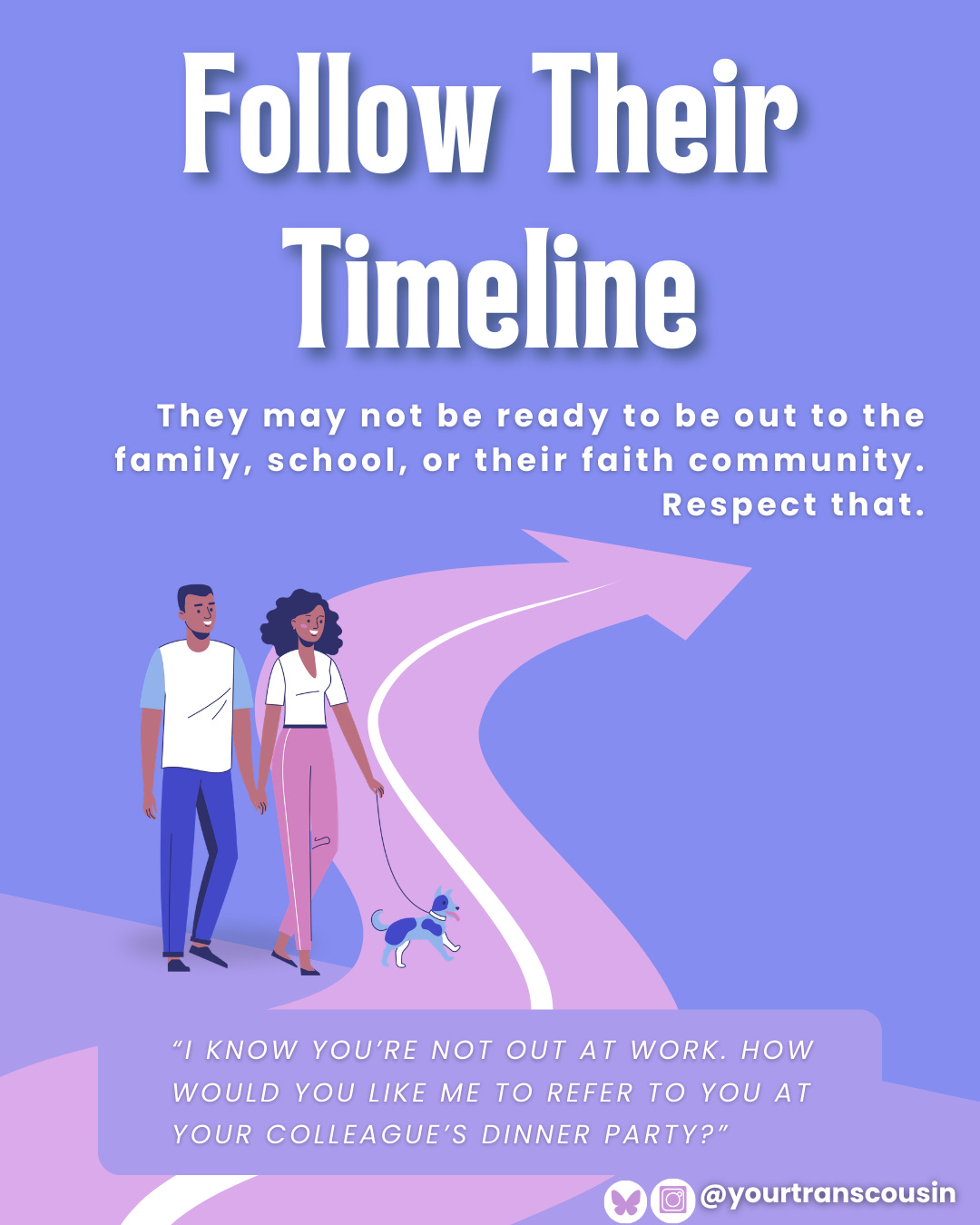
Tip: Follow their timeline. They may not be ready to be out to the family, school, or their faith community. Respect that.
Script: I know you’re not out at work. How would you like me to refer to you at your colleague’s dinner party?
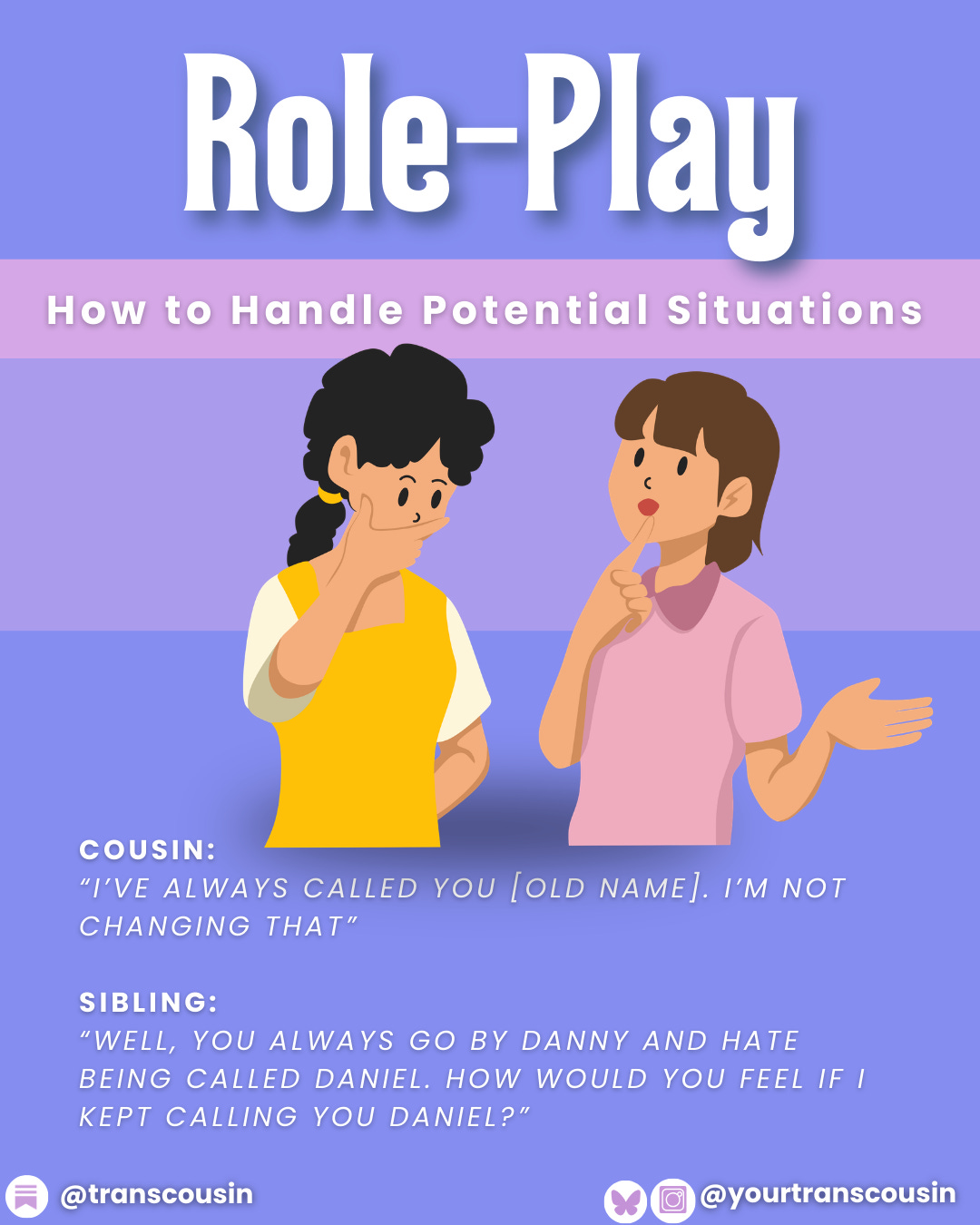
Tip: Role-play how to handle potential situations.
Script:
Cousin: I’ve always called you [old name]. I’m not changing that!
Sibling: Well, you always go by Danny and hate being called Daniel. How would you feel if I kept calling your Daniel?
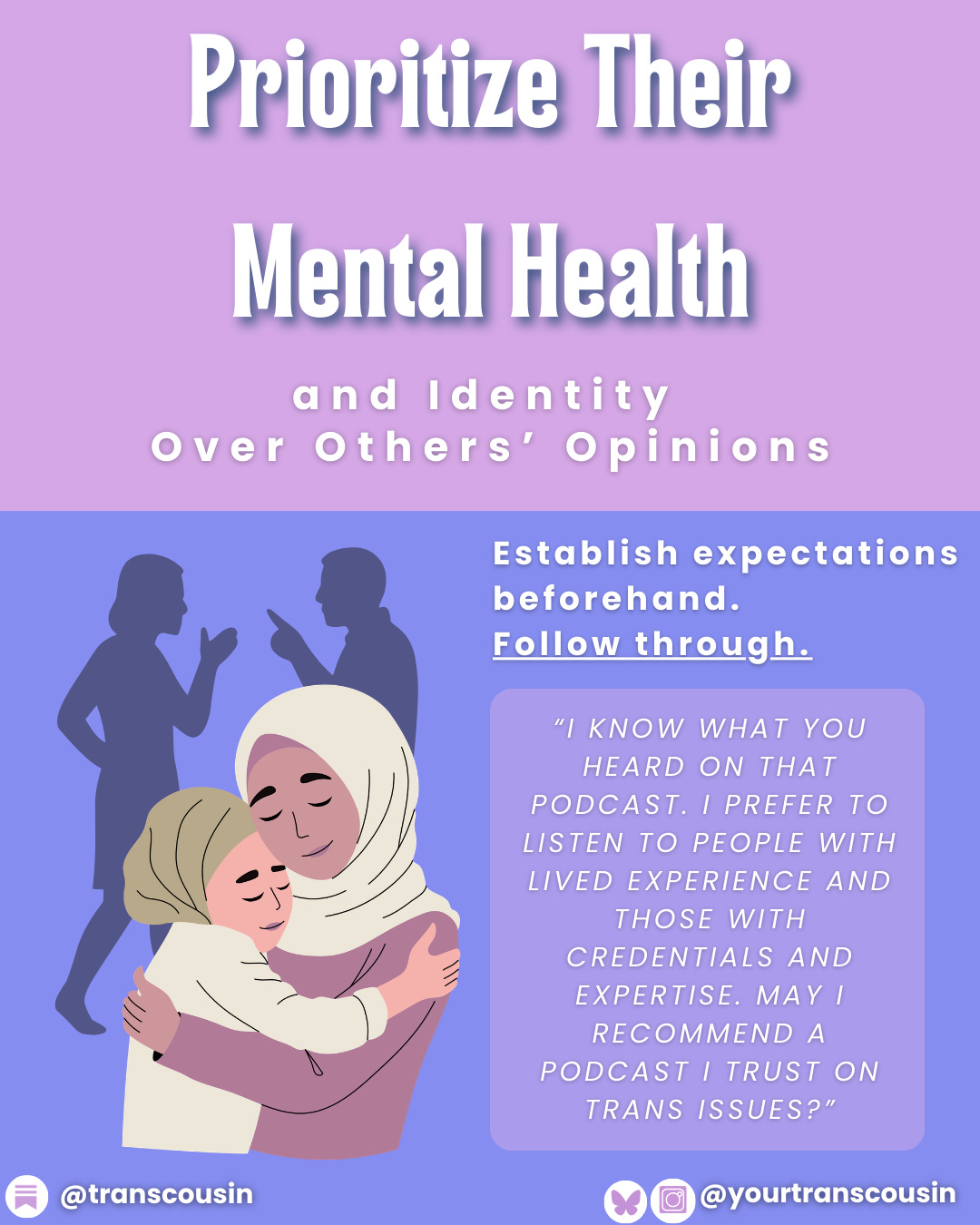
Tip: Prioritize their mental health and identity over others’ opinions. Establish expectations beforehand. Follow through.
Script: [to random cis person with a strong and uninformed opinion on trans lives] I know what you heard on that podcast. I prefer to listen to people with lived experience and those with credentials and expertise. May I recommend a podcast I trust on trans issues?
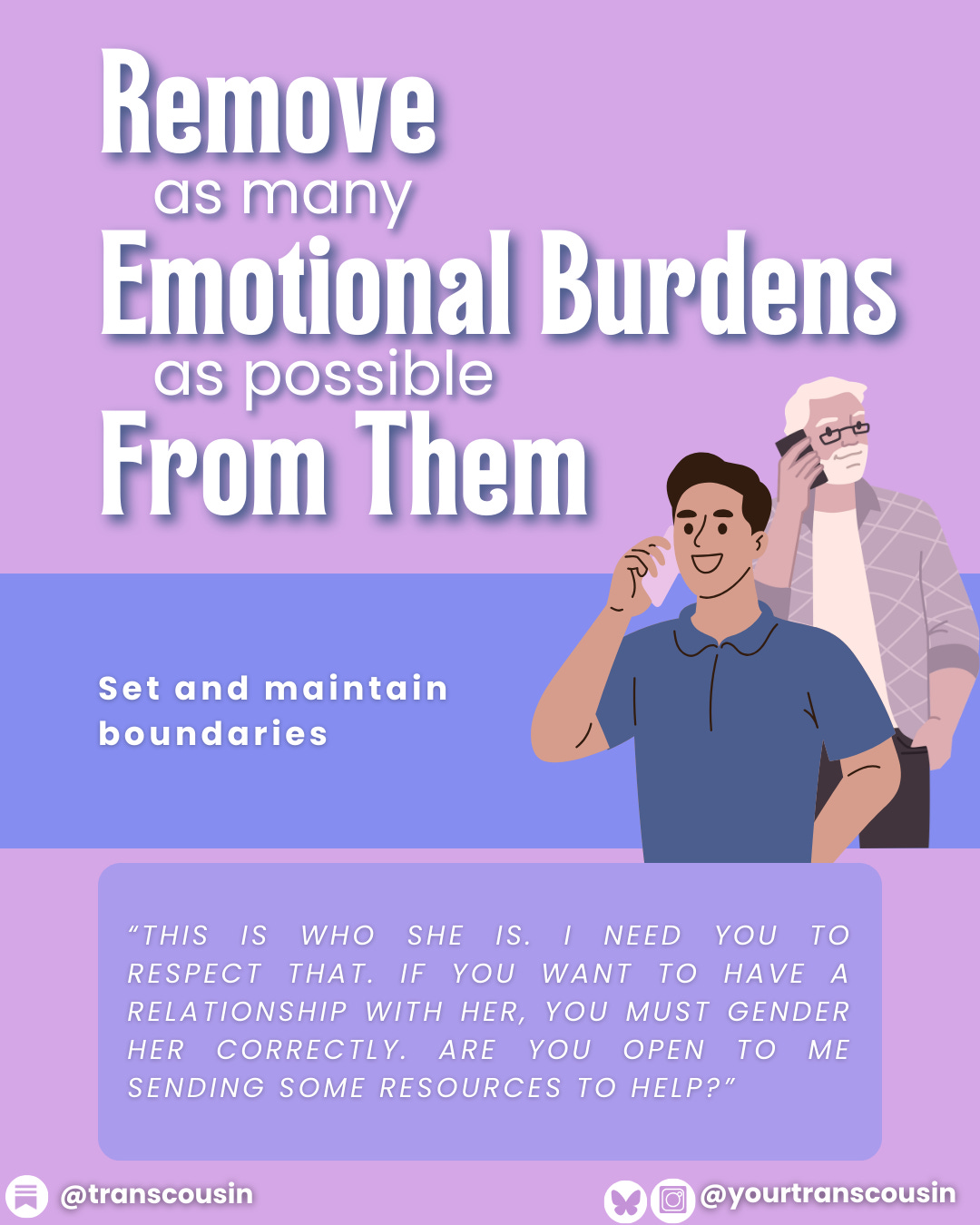
Tip: Remove emotional burdens from them as much as possible. Set and maintain boundaries.
Script: This is who she is. I need you to respect that. If you want to have a relationship with her, you must gender her correctly. Are you open to me sending some resources to help?
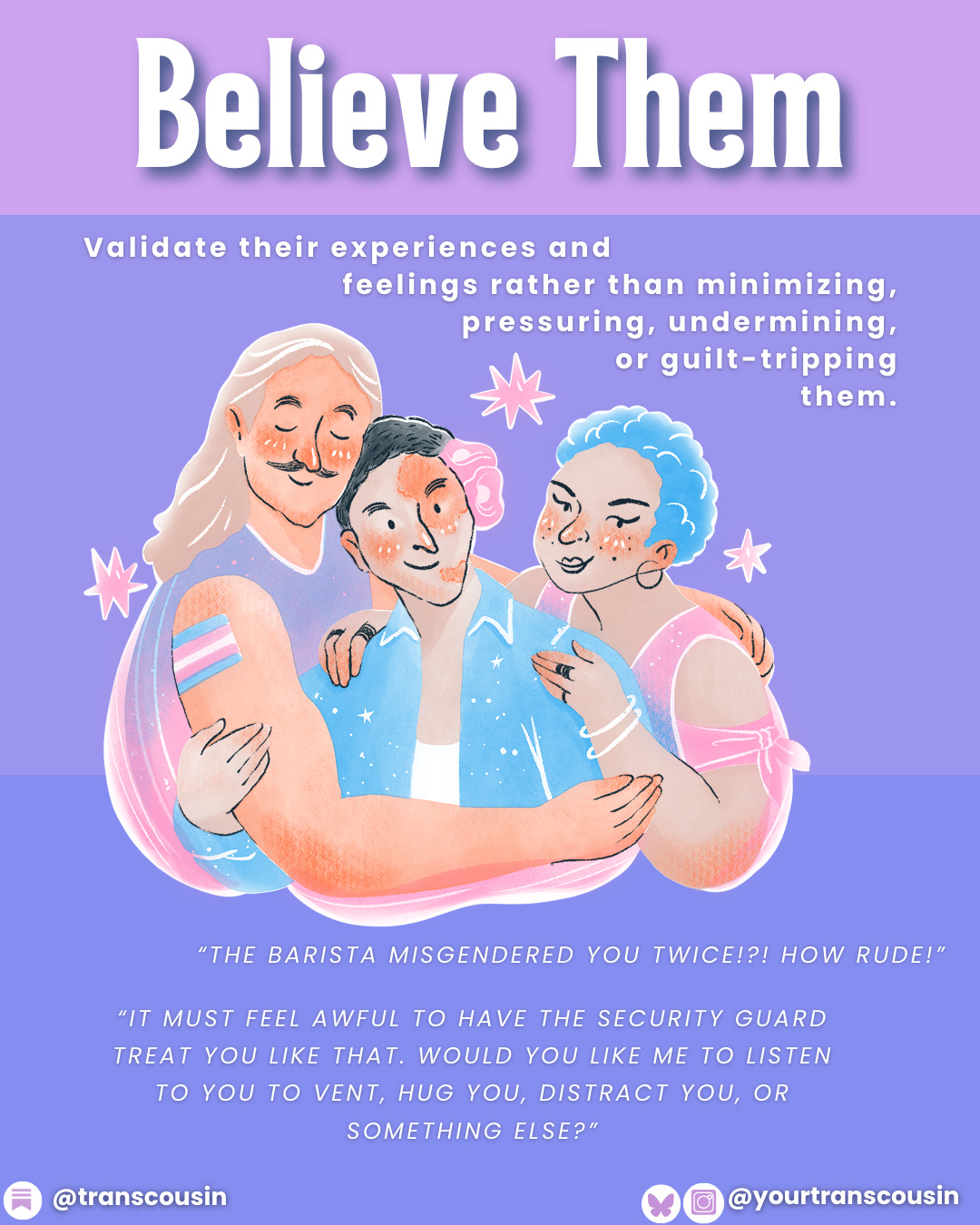
Tip: Believe them. Validate their experiences and feelings rather than minimizing, pressuring, undermining, or guilt-tripping them.
Script: The barista misgendered you twice?!? How rude!
Script: It must feel awful to have the security guard treat you like that. Would you like me to listen to you to vent, hug you, distract you, or something else?
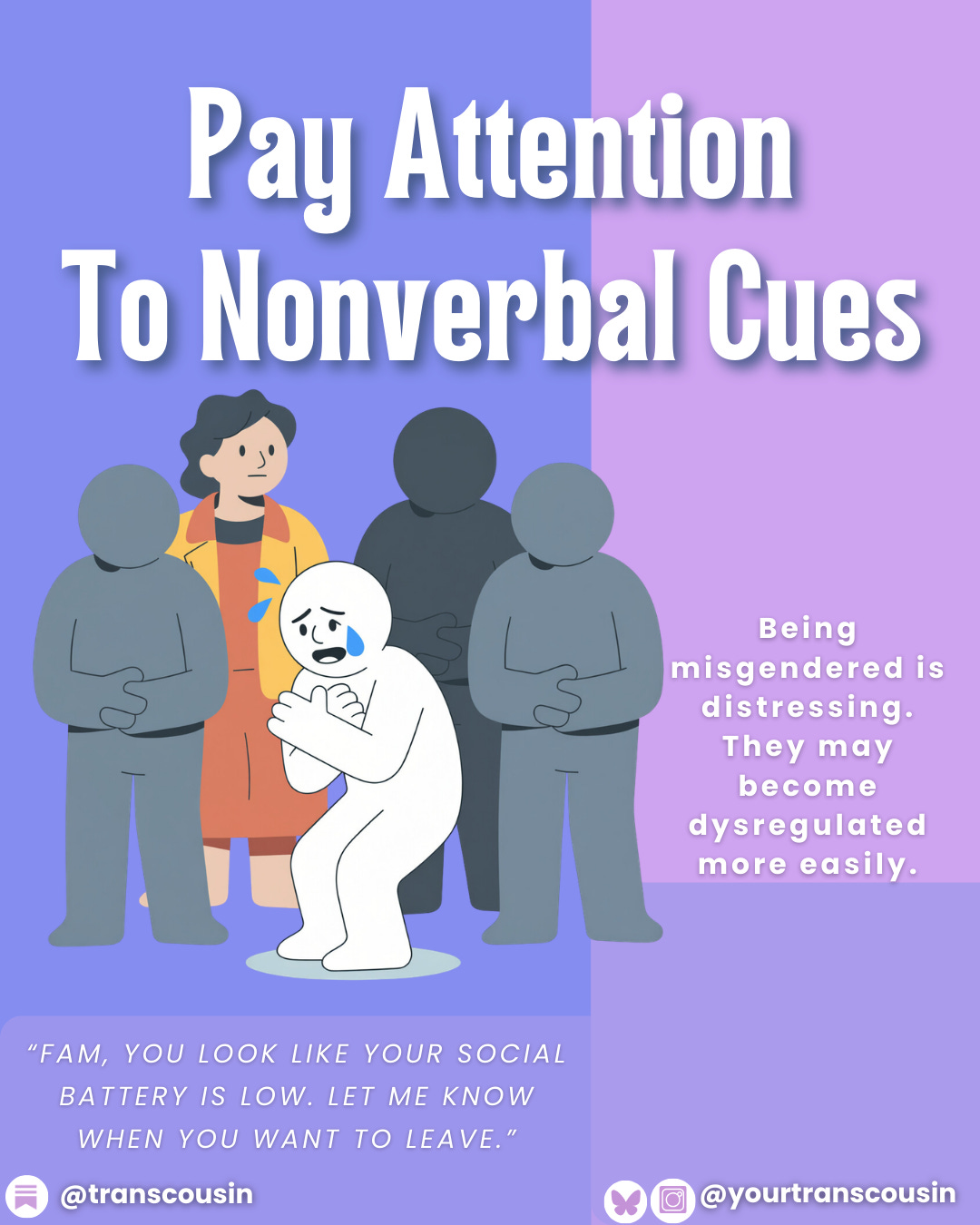
Tip: Pay attention to nonverbal cues. Being misgendered is distressing. They may become dysregulated more easily.
Script: Fam, you look like your social battery is low. Let me know when you want to leave.
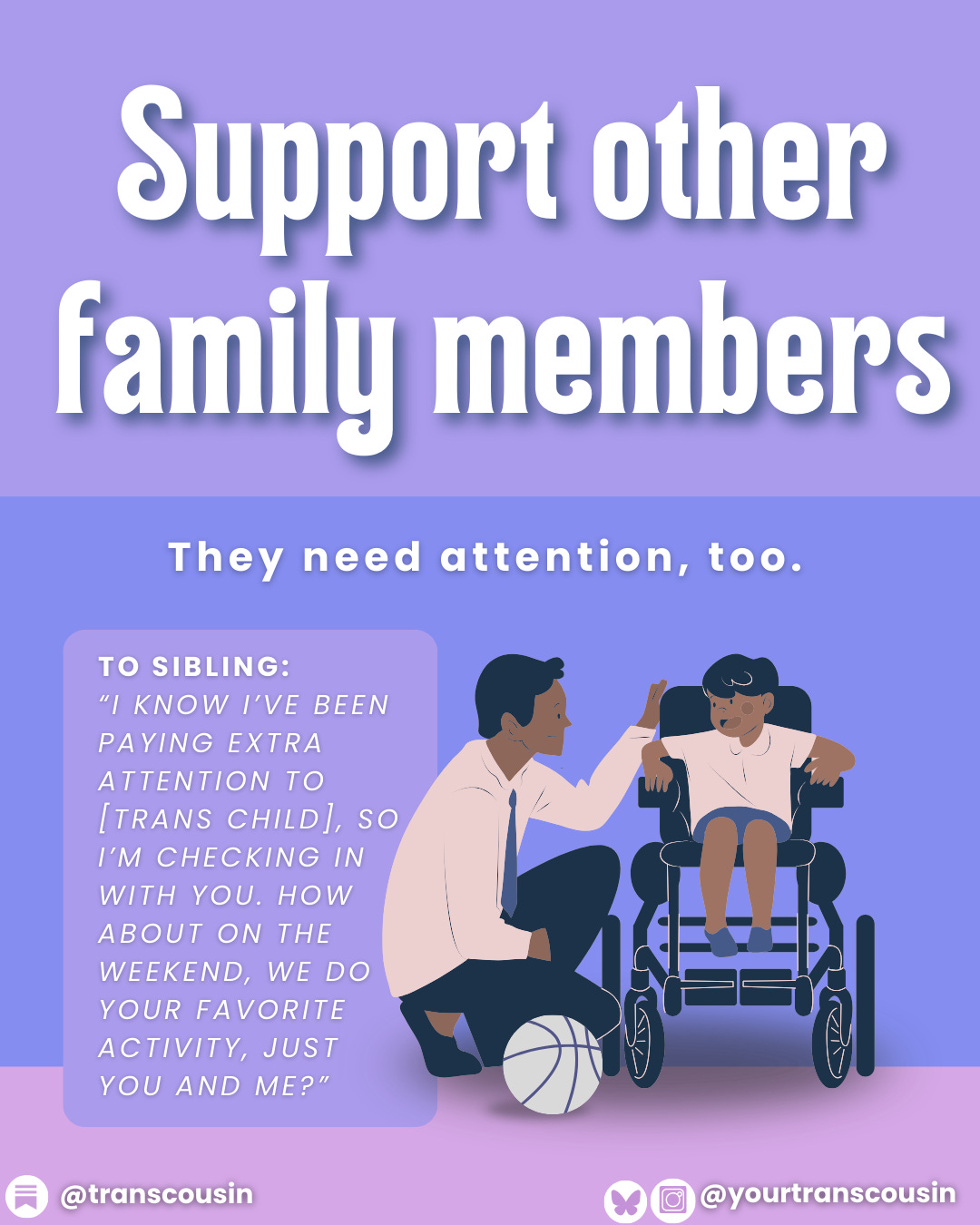
Tip: Support other family members. They need attention, too.
Script: [to sibling] I know I’ve been paying extra attention to [trans child], so I’m checking in with you. How about on the weekend, we do your favorite activity, just you and me?
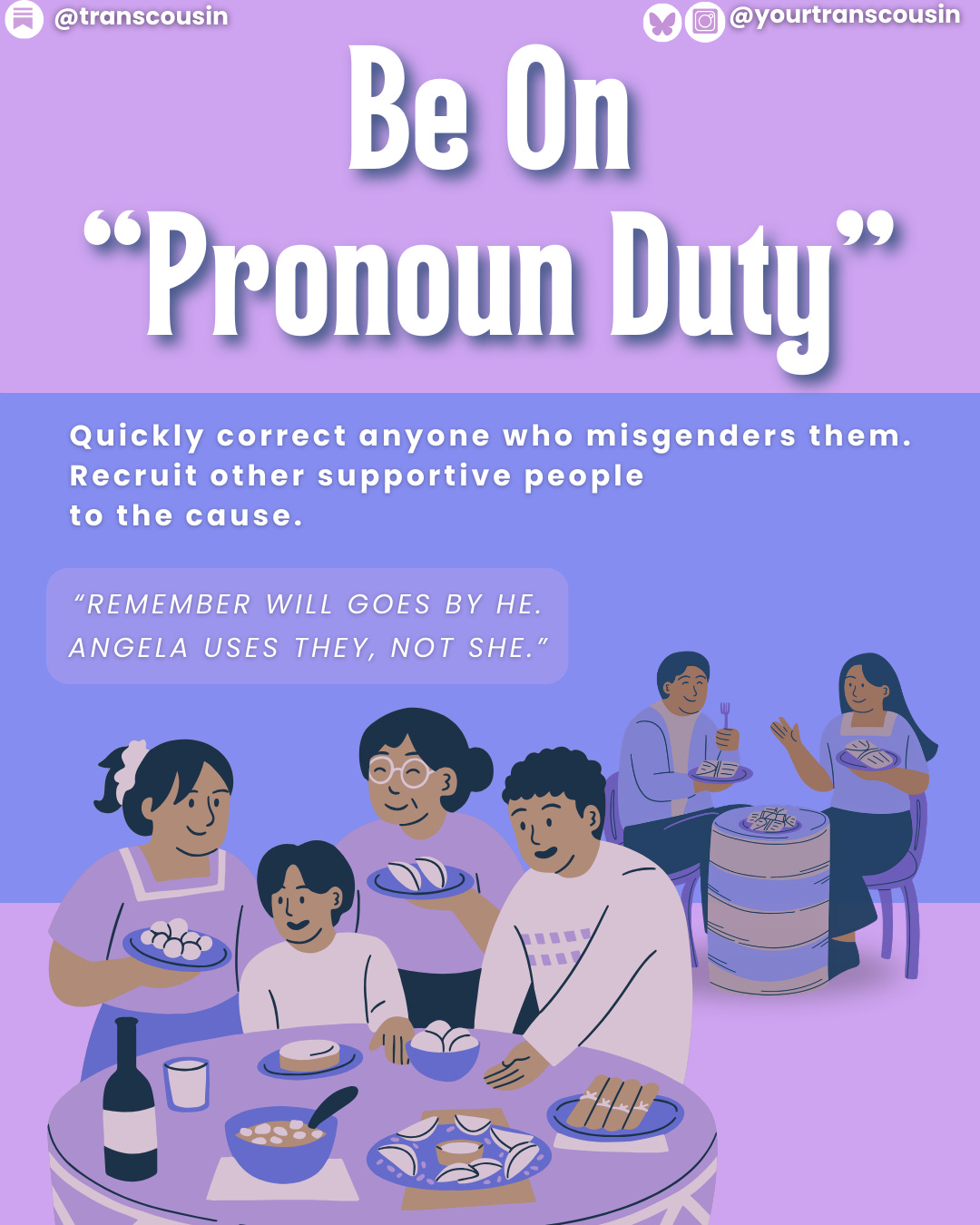
Tip: Be on '“pronoun duty.” Quickly correct anyone who misgenders them. Recruit other supportive people to the cause.
Script: Remember, Will goes by he. Angela uses they, not she.
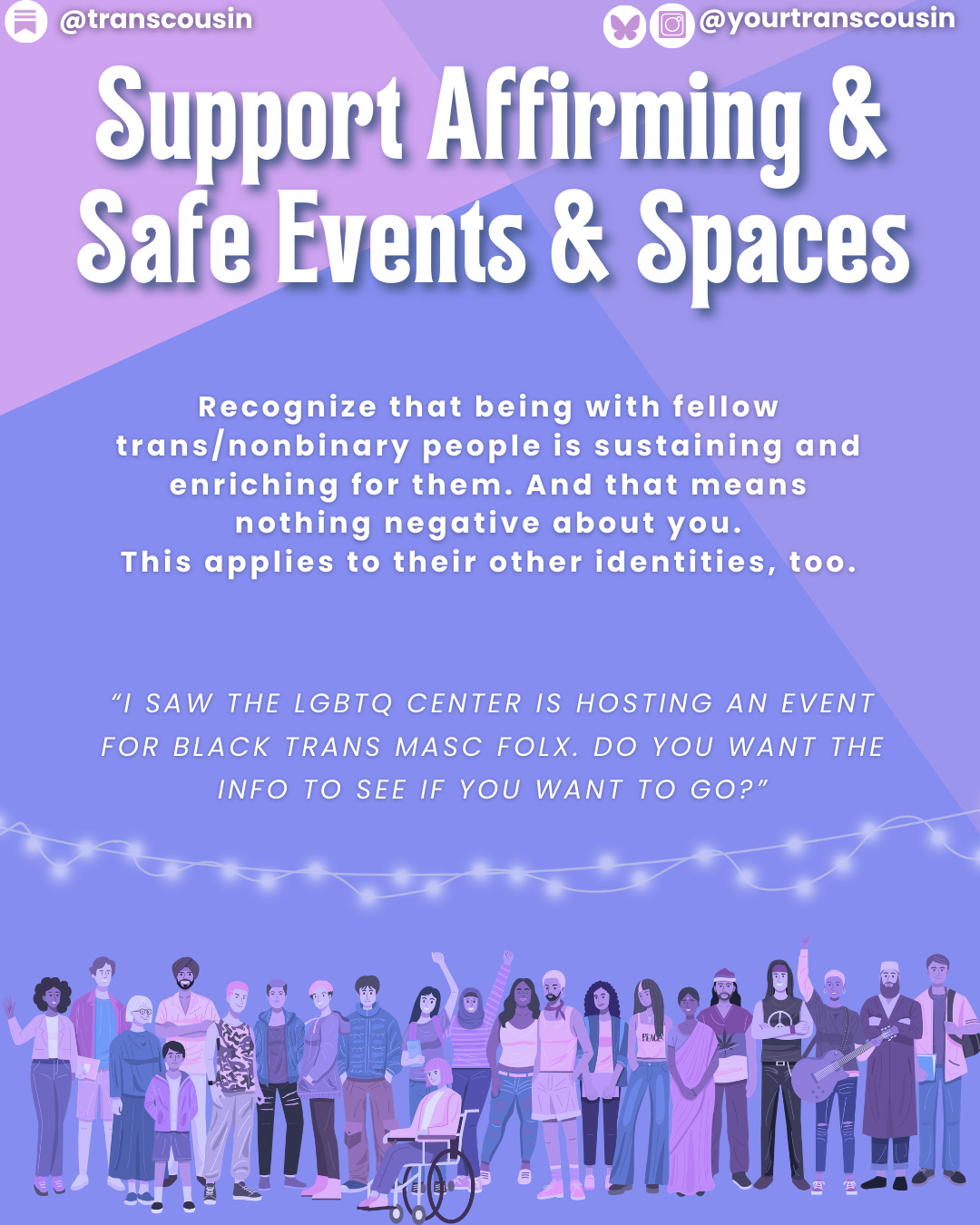
Tip: Support affirming and safe events and spaces. Recognize that being with fellow trans/nonbinary people is sustaining and enriching for them. And that means nothing negative about you. This applies to their other identities, too.
Script: I saw the LGBTQ center is hosting an event for Black trans masc folx. Do you want the info to see if you want to go?
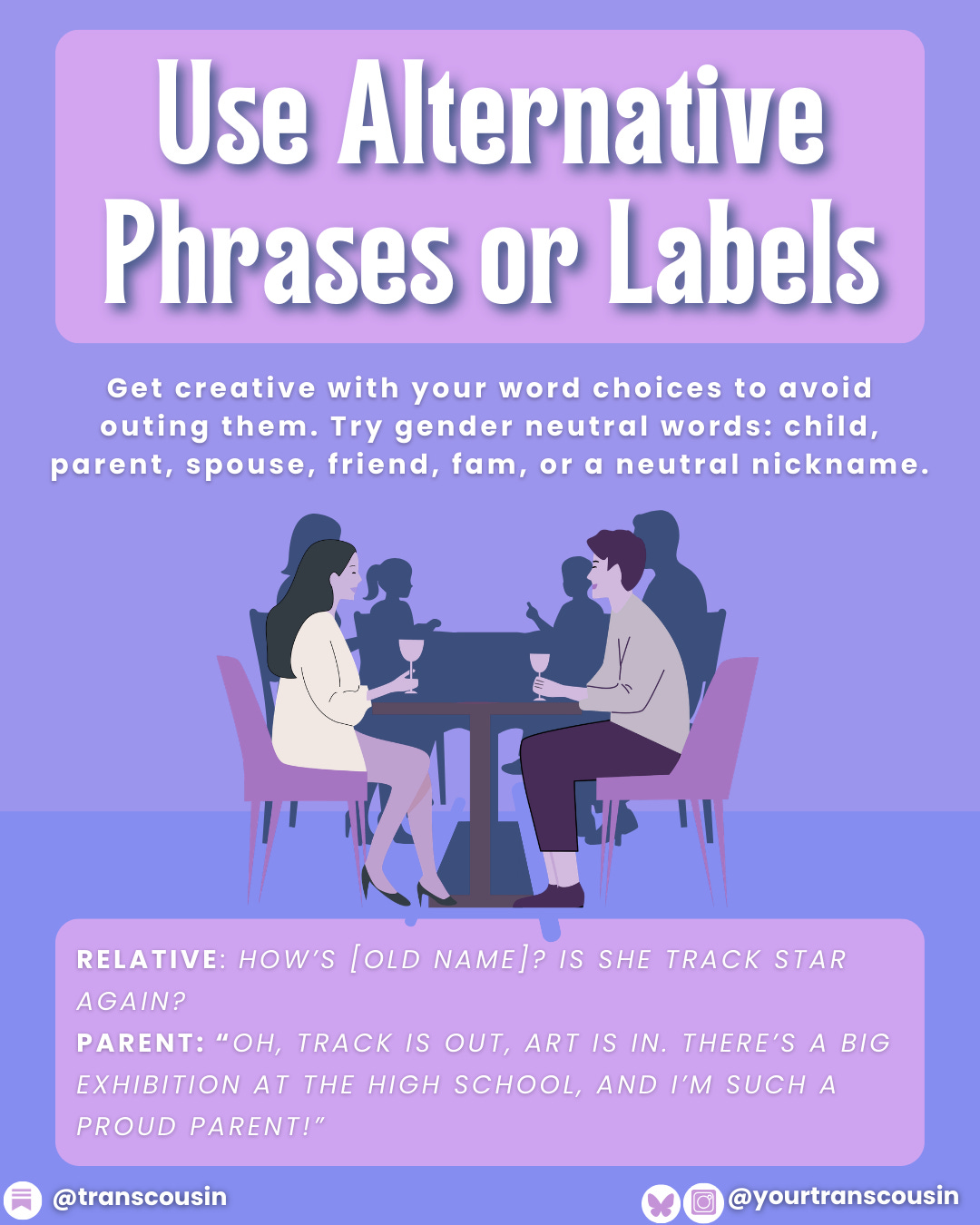
Tip: Use alternative phrases or labels. Get creative with your word choices to avoid outing them. Try gender neutral words: child, parent, spouse, friend, fam, or a neutral nickname.
Script:
Relative: How’s [old name]? Is she a track star again?
Parent: Oh, track is out, art is in. There’s a big exhibition at the high school, and I’m such a proud parent.
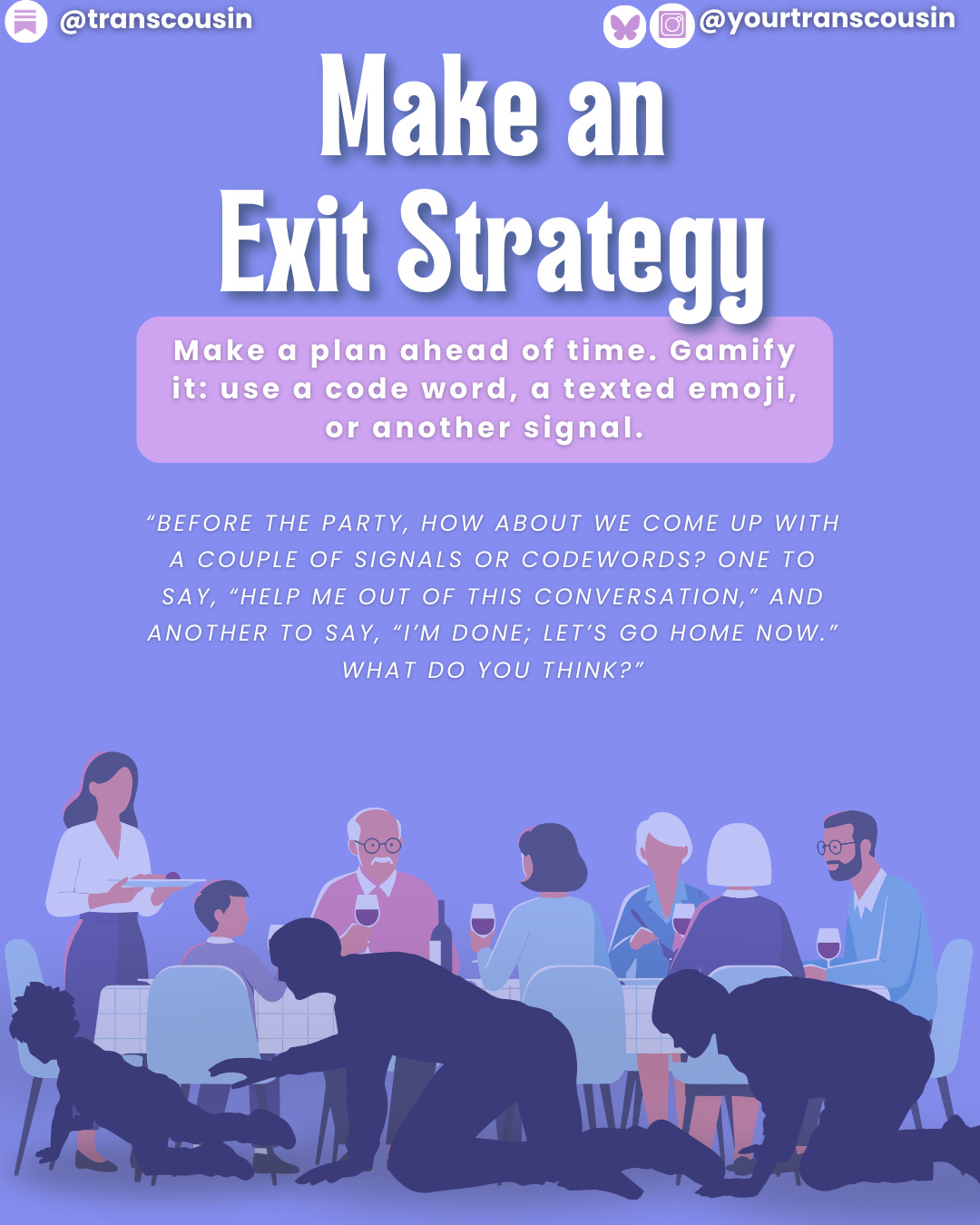
Tip: Make an exit strategy. Make a plan ahead of time. Gamify it: use a code word, a texted emoji, or another signal.
Script: Before the party, who about we come up with a couple of signls or codewords? One to say, “Help me out of this conversation,” and another to say, “I’m done; Let’s go home now.” What do you think?
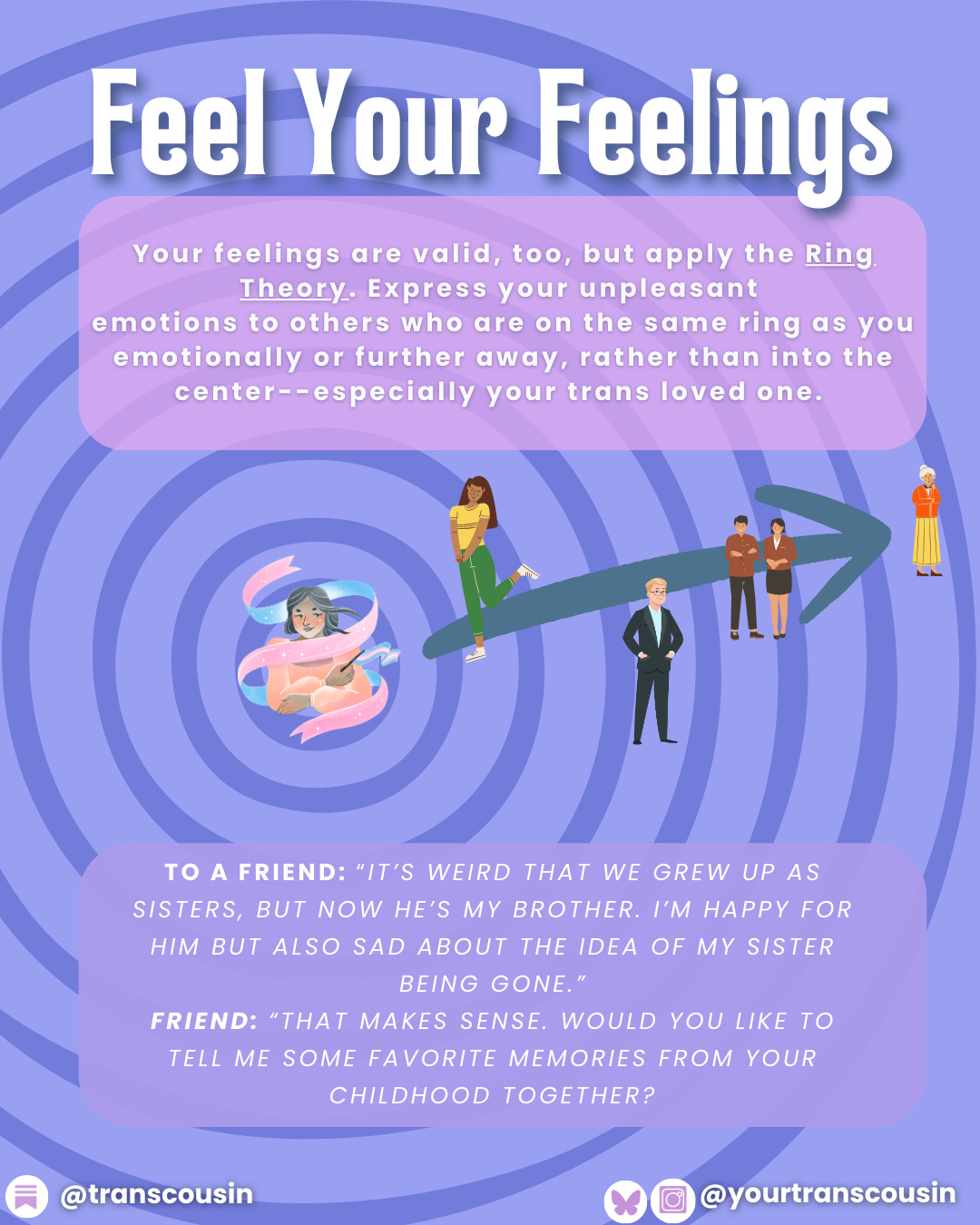
Tip: Feel your feelings. Your feelings are valid, too, but apply the Ring Theory. Express your unpleasant emotions to others who are on the same ring as you emotionally or further away, rather than into the center—especially your trans loved one.
Script:
To a friend: It’s weird that we grew up as sisters, but now he’s my brother. I’m happy for him, but also sad about the idea of my sister being gone.
Friend: That makes sense. Would you like to tell me some favorite memories from your childhood together?
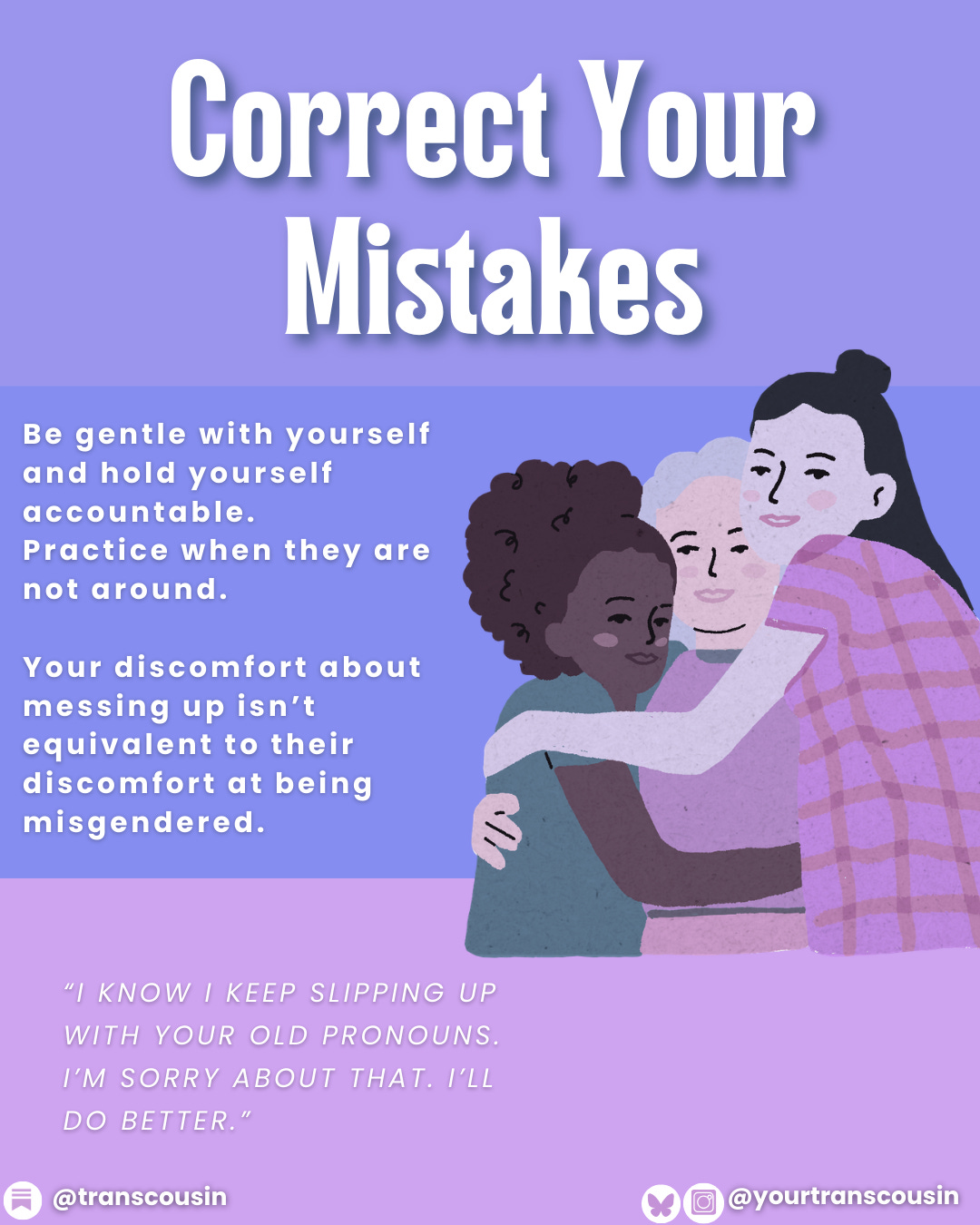
Tip: Correct your mistakes. Be gentle with yourself and hold yourself accountable. Practice when they are not around. Your discomfort about messing up isn’t equivalent to their discomfort at being misgendered.
Script: I know I keep slipping up with your old pronouns. I’m sorry about that. I’ll do better.
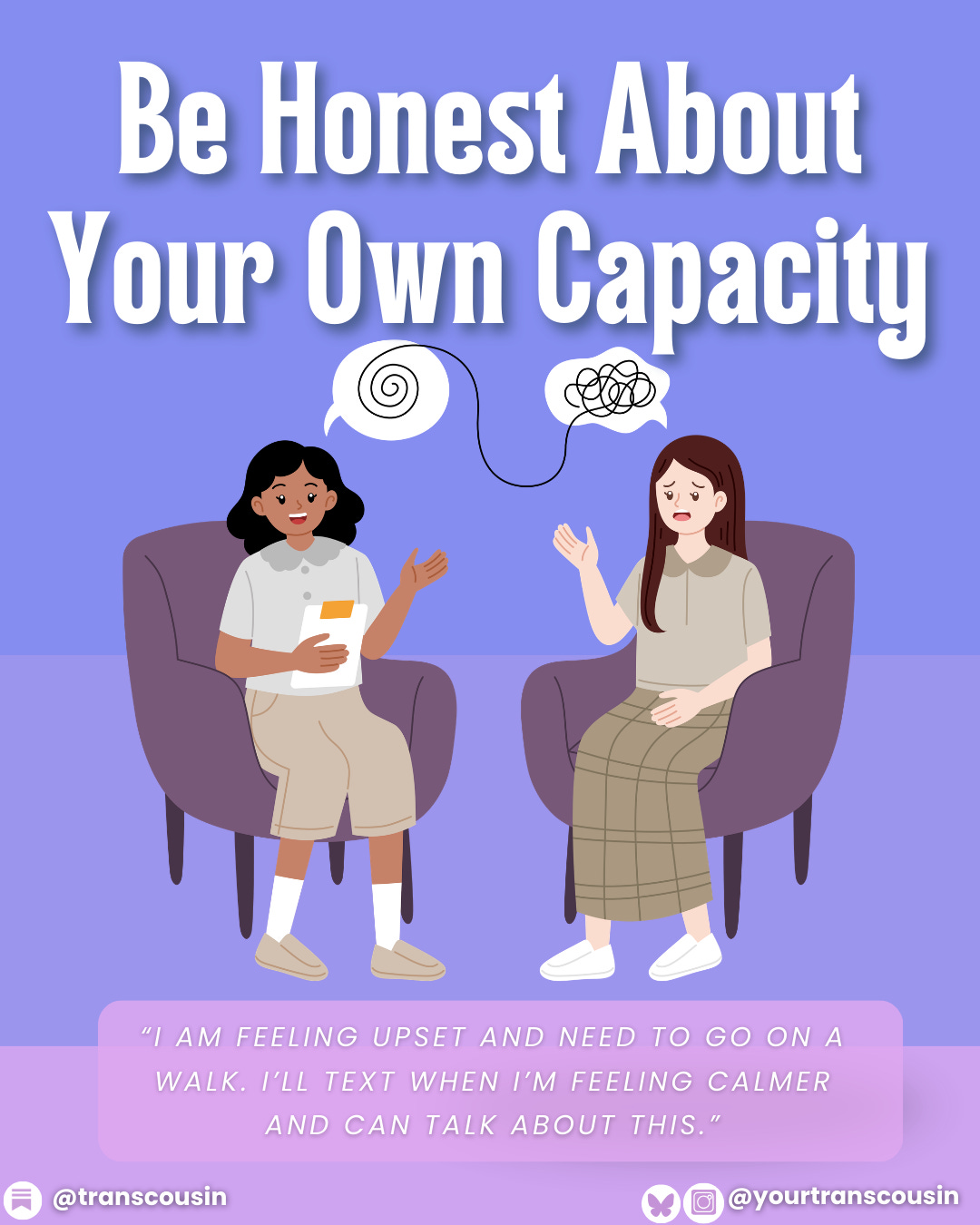
Tip: Be honest about your own capacity.
Script: I am feeling upset and need to go on a walk. I’ll text when I’m feeling calmer and can talk about this.
Final slide: Adapt as needed. Adjust for the person’s age, neurotype, culture, disability status, personality, etc. Your TRans Cousin is a parent, transgender man, educator, social and behavioral scientist, and writer. In creating these, he imagined the support he wished he had and how he wished he had supported his son. Feel free to add your ideas or ask questions in the comments. Thanks to Sara and Sarah for their moms-of-trans-kids’ perspectives and to Sharen and Jericho for their trans therapist perspectives. Huge gratitude to Oli for the original graphic design.
Thank you for putting these together! The nonverbal cues are especially important, my wife goes nonverbal in some situations so I always keep an eye out for that to make sure she is doing okay.